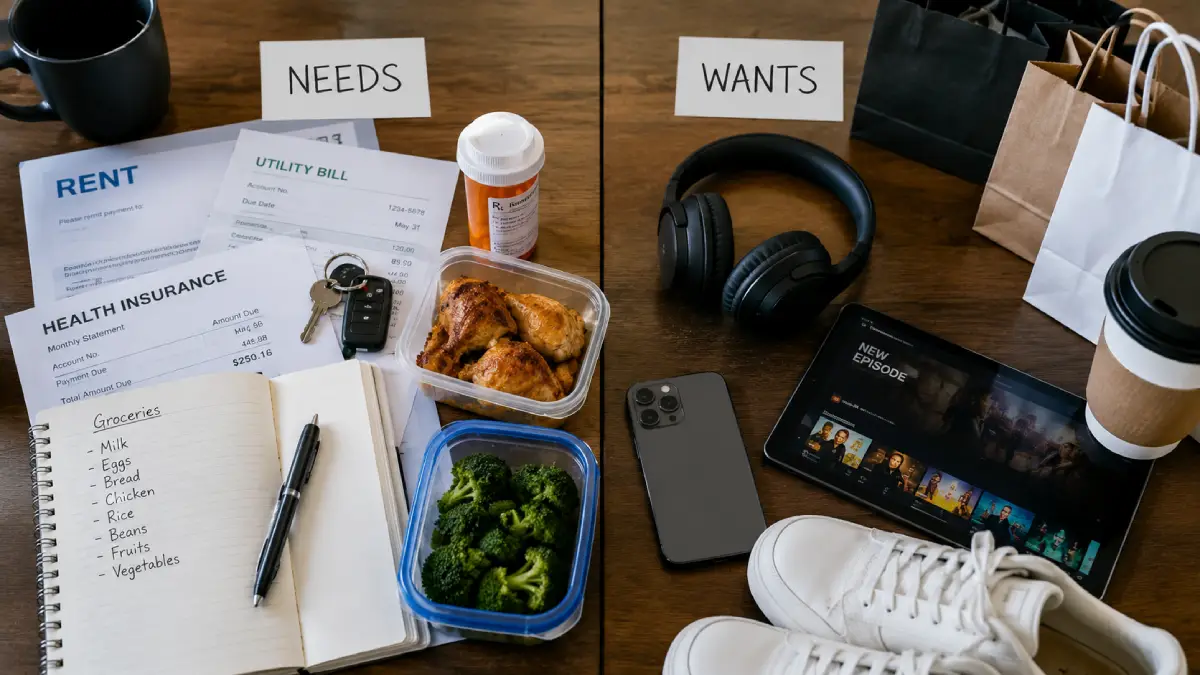
One of the simplest concepts in personal finance is also one of the hardest to apply in everyday life.
Most people understand that paying rent is more important than buying a new pair of sneakers. But real financial decisions are rarely that obvious. Is your daily coffee a need or a want? What about high-speed internet when you work from home? Is replacing your five-year-old smartphone a necessity, or simply something you would like to do?
The line between needs and wants has become increasingly blurred, especially as technology, convenience, and lifestyle expectations have evolved. Understanding the difference isn’t about judging how people spend their money. It’s about making sure your spending reflects your priorities rather than your impulses.
Learning to separate essential expenses from discretionary spending is one of the foundations of successful budgeting and long-term financial health.
What is a Need?
A need is an expense that supports your basic ability to live, work, and maintain your health and safety.
For most households, that includes housing, groceries, utilities, health insurance, transportation to work, prescription medications, and minimum debt payments. These are the costs that continue regardless of whether you’re trying to save money or reduce spending.
Without them, daily life becomes difficult or impossible.
That doesn’t mean every version of these expenses is a necessity. Owning a car may be essential if public transportation isn’t available, but choosing a luxury vehicle instead of a reliable used car is a lifestyle decision.
The category often stays the same, even when the amount you spend changes dramatically.
What Is a want?
A want is anything that improves your lifestyle without being essential for meeting your basic needs.
Dining out, entertainment subscriptions, vacations, designer clothing, gaming consoles, premium smartphones, and impulse purchases all fall into this category for most people.
Wants aren’t bad.
In fact, eliminating every enjoyable expense usually creates frustration and makes budgets impossible to maintain.
The goal isn’t to stop spending on things you enjoy. The goal is to make sure those purchases happen intentionally and fit comfortably within your financial plan.
Healthy personal finance leaves room for both responsibility and enjoyment.
Why the difference matters
Many financial problems don’t begin with one large purchase.
They develop through dozens of small decisions that feel insignificant on their own.
A streaming subscription here.
Food delivery twice a week.
An upgraded phone plan.
Several online impulse purchases.
Individually, each expense may seem manageable. Together, they can quietly consume hundreds of dollars every month.
Recognizing the difference between needs and wants helps you identify where adjustments can be made without sacrificing your quality of life.
Your priorities will change over time
One of the biggest mistakes people make is believing their budget should remain the same forever.
Financial priorities naturally evolve.
Someone in their twenties may choose to spend more on travel and experiences.
Parents may prioritize childcare, education, and family expenses.
Later in life, retirement savings and healthcare become increasingly important.
What qualifies as a priority changes as life changes.
A good budget evolves with you instead of forcing you into the same spending habits year after year.
How to make better spending decisions
Before making a purchase, ask yourself a few simple questions.
Would my life become significantly more difficult if I didn’t buy this?
Can this purchase wait until next month?
Will I still value this purchase six months from now?
Would I rather have this item or move closer to one of my financial goals?
Those questions often provide more useful answers than simply asking whether something is affordable.
Being able to afford something doesn’t automatically mean it’s the best use of your money.
Financial freedom comes from intentional choices
The difference between people who consistently build wealth and those who constantly feel financially stretched isn’t always income.
It’s often awareness.
People who understand where their money goes tend to make better long-term decisions because they’re spending according to their priorities instead of reacting to every temptation.
Separating needs from wants doesn’t remove enjoyment from life.
It simply ensures that today’s spending doesn’t prevent tomorrow’s opportunities.
Financial freedom isn’t built by saying “no” to everything.
It’s built by saying “yes” to the things that matter most.