Americans hoping for cheaper borrowing may need to wait longer.
Federal Reserve Governor Christopher Waller warned Monday that interest rates may need to rise again in the near term if upcoming inflation data shows that price pressures are remaining high or beginning to accelerate.
The warning marks an important shift in tone. For months, much of the discussion surrounding the Federal Reserve focused on when policymakers might begin cutting rates. Now, at least some officials are openly considering whether inflation could require another round of monetary tightening.
In a speech delivered on July 13, Waller said the economy had reached a critical point. While inflation could begin moving lower, he said there was also a realistic possibility that upcoming data would show prices remaining elevated or rising further. In that scenario, tighter monetary policy could be required.
For households, the message is straightforward: credit cards, auto loans, personal loans and mortgages may not become cheaper anytime soon.
Why the Fed is worried about inflation again
The Federal Reserve aims to keep inflation near 2% over the long term. However, inflation has remained above that target, even after a prolonged period of higher interest rates.
At its June meeting, the central bank said economic activity was continuing to expand at a solid pace, while inflation remained elevated partly because of supply shocks and higher energy costs. The Fed kept its benchmark interest rate in a range of 3.50% to 3.75%.
Waller highlighted persistent price growth in core services, an area that includes expenses such as housing, insurance and medical care. These categories are particularly important because service inflation can be more difficult to reverse than temporary increases in food or gasoline prices.
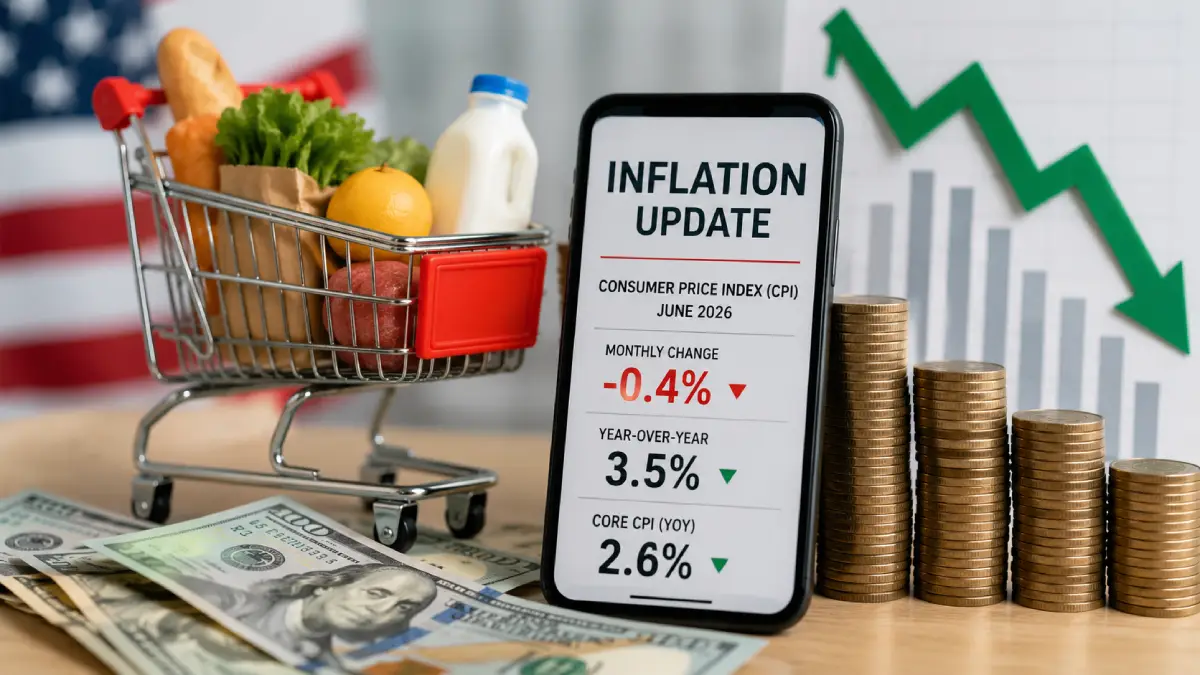
The next major test will come with the release of the June Consumer Price Index on July 14. The Bureau of Labor Statistics is scheduled to publish the report at 8:30 a.m. Eastern Time.
That report could influence expectations for the Federal Reserve’s next policy meeting, scheduled for July 28 and 29.
What higher interest rates would mean for borrowers
The Federal Reserve does not directly set consumer loan rates, but changes in its benchmark rate influence borrowing costs throughout the economy.
If the Fed raises rates—or simply keeps them elevated for longer—consumers could continue facing expensive financing.
Credit cards
Most credit cards have variable interest rates linked to the prime rate. When the Federal Reserve raises its benchmark rate, credit card annual percentage rates usually move higher as well.
That means borrowers who carry balances from month to month could pay more interest, even if they do not make any additional purchases.
For someone with a large revolving balance, a relatively small rate increase can add hundreds of dollars to the total repayment cost.
Personal loans
Personal loan rates are usually fixed after approval, so existing borrowers would generally not see their payments change.
New borrowers, however, could receive more expensive offers if market rates rise. Consumers with weaker credit profiles would likely feel the effect most strongly.
Auto loans
Higher rates increase the monthly cost of financing a vehicle.
Even when the price of the car remains unchanged, a higher interest rate can significantly increase both the monthly payment and the total amount paid over the life of the loan.
Mortgages
Mortgage rates do not follow the Federal Reserve’s benchmark rate directly. They are influenced by bond markets, inflation expectations and the broader economic outlook.
However, renewed concern about inflation can push long-term borrowing costs higher. This could keep mortgage affordability under pressure and make refinancing less attractive.
Savers may continue to benefit
Higher rates are painful for borrowers, but they can benefit people holding cash.
Banks and financial institutions often offer higher returns on savings products when market interest rates are elevated.
Consumers may continue to find competitive yields through:
- high-yield savings accounts;
- money market accounts;
- certificates of deposit;
- short-term Treasury securities.
Some high-yield savings accounts were offering annual percentage yields of up to approximately 4.50% in July, far above the national average offered by traditional savings accounts. Rates and conditions vary by institution, and depositors should verify balance requirements, fees and insurance coverage before opening an account.
For savers, the current environment creates an opportunity to earn more on emergency funds and short-term savings without taking stock-market risk.
What consumers should do now
A possible rate increase does not mean households need to make sudden financial decisions. However, it does make certain priorities more urgent.
Borrowers carrying credit card debt should consider paying down high-interest balances before rates potentially move higher. Transferring debt to a lower-rate product may help, but fees and promotional deadlines need to be reviewed carefully.
Anyone planning to take out a mortgage, auto loan or personal loan should compare offers from several lenders. A difference of one percentage point can have a meaningful impact on a large or long-term loan.
Savers should review the rate currently paid on their accounts. Money left in a traditional account earning a very low yield may be losing purchasing power after inflation.
Consumers should also avoid assuming that rate cuts are guaranteed. The latest Federal Reserve comments show that monetary policy can change quickly when inflation data changes.
Why the next inflation report matters
The upcoming CPI report will provide a clearer picture of whether recent price increases are easing or becoming more entrenched.
May data showed consumer prices running 4.2% higher than one year earlier, according to the Bureau of Labor Statistics. Core categories remained an important source of pressure.
One softer report would not necessarily lead to immediate rate cuts. Likewise, one stronger report would not automatically produce a rate increase.
Federal Reserve officials typically evaluate several months of inflation, employment and economic growth data before changing policy.
Still, the tone of Waller’s comments suggests that the possibility of higher rates is no longer purely theoretical.
Bottom line
The Federal Reserve is not saying that another rate increase is certain.
It is warning that inflation may force policymakers to keep borrowing costs elevated—or potentially raise them again.
For consumers, that means cheap credit may not return soon. Paying down variable-rate debt, comparing loan offers and moving idle savings into higher-yield accounts could be sensible steps while the outlook remains uncertain.
The next inflation report will help determine whether the Fed’s warning becomes a real policy shift or remains a precautionary message.