Category: Savings

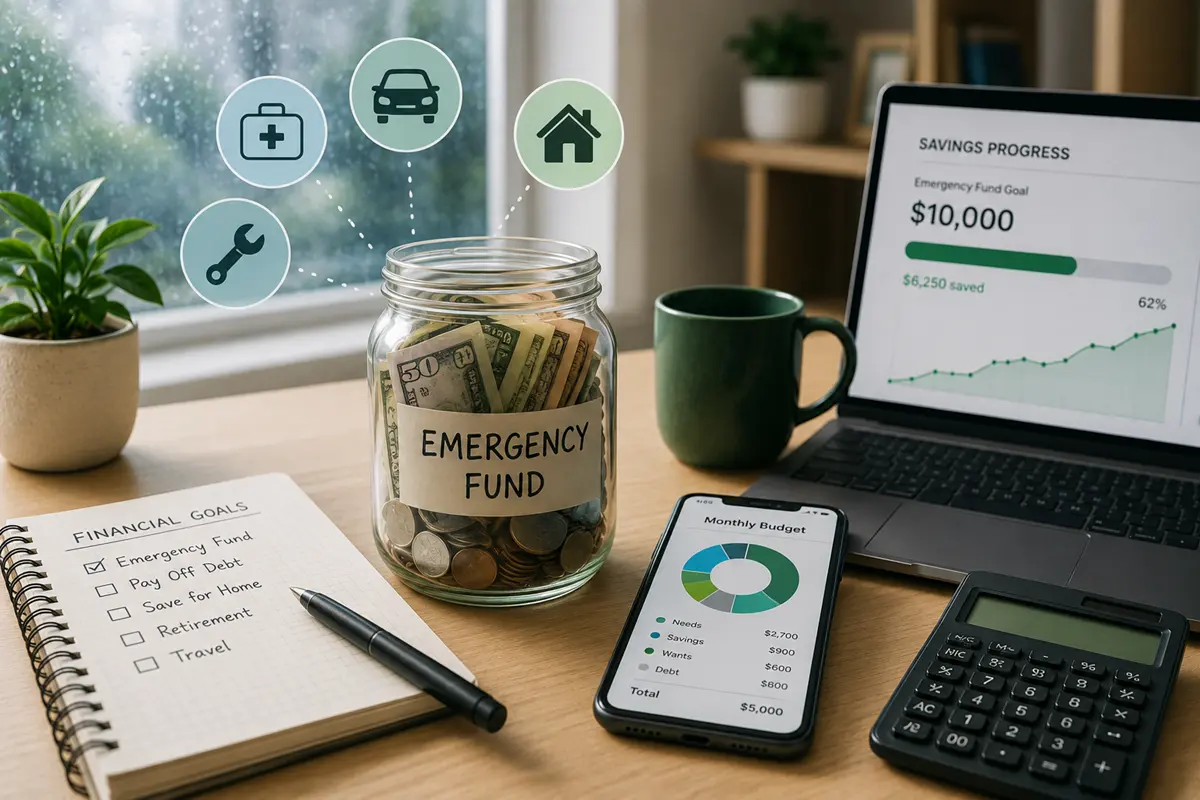
  • What is an emergency fund and how much should you save?

    What is an emergency fund and how much should you save?

    Life has a way of catching us off guard.

    Your car breaks down on the way to work.

    The washing machine stops working.

    A medical bill arrives unexpectedly.

    Your company announces layoffs.

    None of these situations are unusual, yet many people are forced to rely on credit cards or personal loans simply because they don’t have cash available when they need it most.

    That’s exactly why an emergency fund exists.

    An emergency fund isn’t money that’s meant to grow quickly or generate investment returns. Its purpose is much simpler: to protect you from turning unexpected problems into long-term financial setbacks.

    Think of it as financial insurance for your everyday life.

    If an emergency never happens this month, that’s great. Your savings remain untouched. But when life inevitably throws you a surprise, you’ll be grateful that you planned ahead.

    Why everyone needs an emergency fund

    Financial emergencies don’t happen because someone is bad with money.

    They happen because life is unpredictable.

    A sudden expense can affect anyone, regardless of income.

    Without emergency savings, many people are forced to:

    • Use high-interest credit cards
    • Borrow money from family or friends
    • Take out expensive personal loans
    • Delay paying important bills
    • Withdraw money from retirement accounts

    Each of these solutions can create even bigger financial problems later.

    An emergency fund helps you avoid making stressful decisions when you’re already under pressure.

    What is an emergency fund?

    An emergency fund is money set aside specifically for unexpected expenses that cannot reasonably be planned for.

    The key word is unexpected.

    This isn’t the same as saving for a vacation, buying a new phone, or paying holiday expenses.

    Those are planned purchases.

    An emergency fund is reserved for situations that threaten your financial stability or your ability to cover essential living expenses.

    It should remain untouched until a genuine emergency occurs.

    What counts as a financial emergency?

    Not every surprise expense qualifies as an emergency.

    A good rule is to ask yourself one question:

    “Could I have reasonably planned for this?”

    If the answer is yes, it probably shouldn’t come from your emergency fund.

    Typical emergencies include:

    • Job loss
    • Medical expenses
    • Emergency home repairs
    • Major car repairs
    • Urgent travel due to a family emergency
    • Essential appliance replacement
    • Unexpected veterinary bills

    Expenses that usually don’t qualify include:

    • Holidays
    • Shopping
    • New electronics
    • Concert tickets
    • Restaurant visits
    • Planned home renovations
    • Seasonal sales

    How much should you save?

    There’s no single emergency fund amount that works for everyone.

    The right size depends on your income, monthly expenses, job stability, and family situation.

    Instead of focusing on a specific dollar amount, financial experts usually recommend saving enough to cover several months of essential living expenses.

    As a general guideline:

    If you are…Recommended emergency fund
    Single with stable income3 months of expenses
    Couple with two incomes3–4 months
    Self-employed or freelancer6–12 months
    Single-income household6 months or more
    Retired6–12 months

    Notice that these recommendations are based on expenses, not income.

    If your essential monthly expenses are $3,000, then a six-month emergency fund would be:

    $3,000 × 6 = $18,000

    That’s your target—not necessarily something you need to save immediately.

    Start with a smaller milestone

    Many people become discouraged because the final number seems overwhelming.

    Instead of aiming for $20,000 right away, break the goal into smaller milestones.

    For example:

    Milestone Goal
    Starter fund $500
    First safety cushion $1,000
    One month of expenses $3,000
    Three months of expenses $9,000
    Six months of expenses $18,000

    Reaching smaller goals creates momentum and makes saving feel much more achievable.

    Where should you keep your emergency fund?

    An emergency fund should meet three important requirements.

    It should be:

    • Safe
    • Easy to access
    • Separate from your everyday spending account

    The purpose isn’t to earn the highest possible return.

    The purpose is to have money available when you need it immediately.

    Many people choose:

    • A high-yield savings account
    • A money market account
    • A separate bank savings account
    • A cash management account

    Avoid keeping your emergency fund in investments such as stocks or cryptocurrencies.

    If the market falls just before you need the money, you could be forced to sell at a loss.

    Your emergency fund is about stability—not growth.

    How to build your emergency fund faster

    Saving thousands of dollars may sound difficult, but small habits often make the biggest difference over time.

    Pay yourself first

    Treat savings like a monthly bill.

    Schedule an automatic transfer to your savings account on payday before you spend anything else.

    If you never see the money in your checking account, you’re much less likely to spend it.

    Save unexpected income

    Bonuses, tax refunds, cashback rewards, or gifts can provide a significant boost to your emergency fund.

    Instead of spending the entire amount, consider saving at least part of it.

    Cut one unnecessary expense

    You don’t need to eliminate everything you enjoy.

    Sometimes removing just one recurring expense is enough.

    Examples include:

    • An unused subscription
    • Premium streaming services
    • Frequent food delivery
    • Daily specialty coffee
    • Impulse online shopping

    Even saving $100 per month adds up to $1,200 per year.

    Increase your income

    Saving isn’t only about spending less.

    You can also build your emergency fund faster by earning more.

    Ideas include:

    • Freelancing
    • Selling unused items
    • Weekend side jobs
    • Tutoring
    • Pet sitting
    • Ride-sharing
    • Seasonal work

    A temporary increase in income can significantly shorten the time needed to reach your savings goal.

    When should you use your emergency fund?

    Before withdrawing money, ask yourself three questions.

    Is the expense unexpected?

    Is it necessary?

    Can it wait?

    If the answer is yes, yes, and no, your emergency fund is probably the right place to cover the expense.

    After using the money, make rebuilding your fund a priority.

    Think of it as refilling your financial safety net.

    Common mistakes

    Investing your emergency fund

    Higher returns are attractive, but emergency savings should never depend on market performance.

    Saving too little

    A few hundred dollars is a great start, but it may not be enough to cover a prolonged emergency.

    Keep building your fund even after reaching your first milestone.

    Using it for non-emergencies

    A vacation discount, a new phone, or holiday shopping might feel urgent, but they aren’t emergencies.

    Protect your emergency fund by using it only when it’s truly necessary.

    Keeping it in your everyday checking account

    If your emergency savings sit next to the money you use every day, you’ll be more tempted to spend them.

    A separate account creates a helpful psychological barrier.

    Signs your emergency fund is working

    You know your emergency fund is doing its job when:

    • Unexpected bills no longer cause panic.
    • You rely less on credit cards.
    • You don’t need to borrow money from friends or family.
    • Financial setbacks become temporary rather than long-term problems.
    • You feel more confident making financial decisions.

    An emergency fund doesn’t eliminate financial surprises.

    It simply gives you the ability to handle them without creating new financial stress.

    Frequently asked questions

    How much should I have in an emergency fund?

    A good goal is to save enough to cover three to six months of essential living expenses. If you’re self-employed or have an unpredictable income, consider building a larger fund that covers six to twelve months.

    Is $1,000 enough for an emergency fund?

    A $1,000 emergency fund is an excellent first milestone. It can cover many unexpected expenses, such as car repairs or medical bills, but most people should continue saving until they have several months of expenses set aside.

    Should I pay off debt before building an emergency fund?

    It’s generally wise to save a small emergency fund first, even if you have debt. Having some cash available can prevent you from relying on high-interest credit cards when unexpected expenses arise.

    Where is the best place to keep an emergency fund?

    A high-yield savings account is one of the best options because it keeps your money safe, easily accessible, and separate from your daily spending account.

    Should I invest my emergency fund?

    No. Emergency savings should not be invested in assets that can lose value, such as stocks or cryptocurrencies. The primary goal is stability and quick access—not high returns.

    Can I use my emergency fund for a vacation?

    No. Vacations are planned expenses and should have their own savings goal. An emergency fund should only be used for unexpected and essential financial situations.

    How long does it take to build an emergency fund?

    That depends on your income and savings rate. Someone saving $300 each month could build a $3,600 emergency fund in one year. The key is consistency rather than speed.

    What should I do after using my emergency fund?

    Start rebuilding it as soon as your financial situation allows. Replacing the money you used helps ensure you’re prepared for the next unexpected expense.

    Bottom line

    An emergency fund is one of the simplest—and most valuable—financial tools you can build.

    It won’t make you wealthy overnight or generate impressive investment returns. Instead, it gives you something even more important: financial stability when life doesn’t go according to plan.

    Whether it’s a medical emergency, an unexpected repair, or a temporary loss of income, having cash set aside allows you to handle the situation without relying on debt or disrupting your long-term financial goals.

    The best time to start was yesterday.

    The second-best time is today.

    Even if you begin with just $25 or $50 per week, consistent saving can grow into a financial cushion that gives you greater confidence, flexibility, and peace of mind.


  • How to save your first $10,000

    How to save your first $10,000

    Ask almost anyone who’s built financial security, and they’ll tell you that the first $10,000 was the hardest.

    Not because it required complicated investment strategies or an unusually high salary, but because it demanded something much more difficult: changing everyday habits. Before you have meaningful savings, every unexpected expense feels like a setback. A car repair, a medical bill, or even replacing a broken appliance can erase months of progress overnight.

    That’s why reaching your first five figures in savings is such an important milestone. It represents more than the balance in your account. It proves you’ve developed the habits necessary to build long-term wealth.

    The journey isn’t always fast, and it rarely follows a straight line. But with a realistic plan and consistent decisions, saving $10,000 is achievable for far more people than they realize.

    Why the first $10,000 feels so difficult

    Saving money becomes easier as your financial foundation grows.

    When you have little or no savings, every dollar you set aside competes with immediate needs and everyday temptations. At the same time, your money isn’t yet generating meaningful interest, so nearly all of your progress depends on your own contributions.

    Once you’ve accumulated a larger balance, the process begins to accelerate. Interest compounds, financial emergencies become less disruptive, and you’re less likely to rely on debt when unexpected expenses arise.

    The first $10,000 creates momentum that makes future financial goals feel much more attainable.

    Start with a realistic monthly target

    Many people begin by asking how they can save $10,000 as quickly as possible.

    A better question is how much they can realistically save every month without abandoning the plan after a few weeks.

    Consistency almost always beats intensity.

    Saving $300 every month for several years will usually produce better results than attempting to save $1,500 for two months before giving up entirely.

    The goal should fit your current financial situation, not someone else’s.

    Increase income before cutting everything

    Budgeting matters, but there is a limit to how much you can reduce spending.

    Income, on the other hand, often has far greater potential.

    Negotiating a raise, changing jobs, taking freelance work, selling unused items, or creating a small side business may contribute far more toward your first $10,000 than eliminating every small luxury from your life.

    Successful savers usually combine both approaches: they spend intentionally while continuously looking for opportunities to earn more.

    Automate your savings

    One of the simplest ways to build savings is to remove the decision altogether.

    Automatic transfers scheduled for payday ensure that saving happens before money is available for discretionary spending.

    Over time, automation turns saving from an occasional activity into a routine financial habit.

    People rarely miss money they never had the opportunity to spend.

    Give your savings a purpose

    Saving becomes easier when the goal feels tangible.

    Rather than simply trying to reach $10,000, think about what that money represents.

    For one household, it may become a fully funded emergency fund.

    For another, it could be the beginning of a down payment on a home.

    Others may view it as the foundation of their investment portfolio or the financial cushion that allows them to change careers without fear.

    Money saved without purpose often gets spent without purpose.

    Celebrate progress, not perfection

    Financial goals aren’t achieved through perfect months.

    Unexpected expenses will happen.

    Some months you’ll save less than planned.

    Others you may not save at all.

    The important part is returning to the plan instead of assuming you’ve failed.

    Building wealth is rarely defined by one outstanding decision. It’s usually the result of hundreds of ordinary decisions repeated over many years.

    Your first $10,000 isn’t the finish line.

    It’s proof that you’ve built habits capable of carrying you much further.

  • How much money should you really have saved?

    How much money should you really have saved?

    When people think about financial security, they often imagine a six-figure salary, a growing investment portfolio, or owning a home. In reality, the strongest financial safety net usually starts with something much simpler: having enough cash set aside to deal with life’s unexpected surprises.

    A broken transmission, an emergency room visit, a sudden layoff, or even an expensive home repair can disrupt months—or years—of financial progress if you’re forced to rely on credit cards or personal loans. That’s exactly why financial planners consistently recommend building an emergency fund before chasing more ambitious financial goals.

    An emergency fund isn’t designed to make you wealthy. It’s designed to keep a temporary setback from becoming a long-term financial problem.

    In today’s economy, where inflation has increased the cost of everyday necessities and many households continue to face higher housing, insurance, and healthcare expenses, having accessible cash has become more important than ever.

    The biggest misunderstanding about emergency funds

    Many people believe there’s a magic number everyone should save. You’ll often hear advice suggesting three months of expenses, six months of expenses, or even a full year of living costs.

    The truth is that there isn’t a universal target.

    Someone with a stable government job, excellent health insurance, and two steady household incomes faces a very different level of risk than a freelancer whose income changes every month or a single parent supporting children alone.

    Instead of asking, “How much should everyone save?” a better question is, “How much would allow me to recover from my most likely financial emergency without going into debt?”

    That’s the number that matters.

    Start with one month, not six

    One reason many people never build an emergency fund is that the goal feels overwhelming.

    If your monthly expenses total $4,000, saving six months of expenses means accumulating $24,000. For most households, that’s intimidating enough to prevent them from starting at all.

    A better strategy is to think in milestones.

    The first objective might simply be saving $1,000. Once that goal is reached, work toward covering one full month of essential expenses. After that, aim for three months, and eventually six if your circumstances justify it.

    Each milestone dramatically improves your financial resilience, even if you’re still working toward the larger goal.

    Building financial security is rarely about one giant leap. It’s usually the result of hundreds of consistent monthly decisions.

    Where should you keep your emergency savings?

    One of the most common mistakes people make is investing money they’ll potentially need tomorrow.

    Emergency savings shouldn’t be exposed to stock market volatility. If your investments fall 25% at the same time you lose your job, you’re forced to sell assets when prices are already down.

    Instead, your emergency fund should prioritize three qualities:

    • Safety
    • Liquidity
    • Accessibility

    For most Americans, that means keeping the money in a high-yield savings account or another FDIC-insured cash account where it remains protected while still earning interest.

    The purpose of an emergency fund isn’t maximizing returns—it’s guaranteeing access when life doesn’t go according to plan.

    When should you actually use it?

    An emergency fund isn’t there for holiday shopping, upgrading your phone, or taking advantage of a sale.

    It exists for events that are unexpected, necessary, and financially significant.

    Losing your job, replacing a failed furnace in the middle of winter, paying a major medical bill, or repairing a vehicle you depend on to get to work are exactly the kinds of situations these savings are meant to cover.

    If every inconvenience becomes an “emergency,” the account quickly loses its value.

    The discipline isn’t only in saving the money—it’s in protecting it until it’s genuinely needed.

    Why emergency savings reduce financial stress

    Money affects far more than bank balances.

    Numerous studies have shown that financial uncertainty contributes to anxiety, sleep problems, relationship stress, and reduced workplace productivity. Even relatively small cash reserves can improve decision-making because they give people time to respond thoughtfully instead of reacting out of panic.

    Imagine receiving an unexpected $2,000 repair bill.

    Without savings, the decision may involve high-interest debt, borrowing from family, or missing other essential payments.

    With an emergency fund, the problem is still inconvenient—but it no longer threatens your financial stability.

    That’s the real value of emergency savings. They don’t eliminate emergencies. They reduce the damage those emergencies cause.

    Building an emergency fund faster

    Growing your savings doesn’t always require dramatic lifestyle changes.

    Many successful savers automate a fixed transfer every payday before they have the chance to spend the money elsewhere. Others direct tax refunds, work bonuses, freelance income, or cash gifts straight into their emergency fund.

    Increasing income can often have a greater impact than cutting every small expense. Negotiating a salary increase, taking on occasional freelance work, or selling unused items may accelerate your savings far more quickly than giving up a few restaurant meals each month.

    Consistency matters much more than perfection.

    A person who saves $200 every month for several years is likely to build greater financial security than someone who saves aggressively for a few weeks before giving up entirely.

    Financial confidence starts before you need it

    The irony of an emergency fund is that you hope you never need it.

    Its greatest benefit isn’t earning interest or sitting in your savings account. It’s providing confidence that an unexpected expense won’t immediately become a financial crisis.

    The most financially secure households aren’t necessarily those with the highest incomes. They’re often the ones that prepare for uncertainty before uncertainty arrives.

    Building an emergency fund isn’t the most exciting financial goal. It won’t make headlines or generate impressive investment returns. But few financial decisions provide as much long-term peace of mind.