Tag: how to

  • Biweekly budget: How to budget when you get paid every two weeks

    Biweekly budget: How to budget when you get paid every two weeks

    Getting paid every two weeks can feel confusing when most of your bills are due monthly. Some months you’ll receive two paychecks, while a few months each year you’ll receive three. Without a plan, it’s easy to overspend after payday and struggle before the next one arrives.

    A biweekly budget solves this problem by matching your spending plan to your pay schedule instead of the calendar month. It helps you cover monthly bills, save consistently and make every paycheck work harder.

    Whether you’re paid every other Friday, every other Thursday or another biweekly schedule, this guide will show you exactly how to build a budget that fits your income.

    Key takeaways

    • A biweekly budget follows your paycheck schedule instead of calendar months.
    • Most people receive 26 paychecks per year.
    • Two months each year usually include a third paycheck.
    • Planning around paydays makes bill payments much easier.
    • The extra paycheck can accelerate savings or debt repayment.

    What is a biweekly budget?

    A biweekly budget is a spending plan designed for people who receive a paycheck every two weeks.

    Instead of budgeting from the first day of the month until the last, you budget from one payday to the next.

    This approach aligns your income with your expenses and gives you a much clearer picture of available cash.

    How does a biweekly pay schedule work?

    Employees paid every two weeks receive:

    • 26 paychecks each year
    • Usually two paychecks per month
    • Two months with three paychecks

    This is different from employees paid twice per month, who receive exactly 24 paychecks annually.

    Pay schedule Paychecks per year
    Weekly 52
    Biweekly 26
    Twice monthly 24
    Monthly 12

    Knowing your exact pay schedule is the first step toward building an accurate budget.

    Why a biweekly budget works

    Many budgeting problems happen because expenses are organized monthly while income arrives every two weeks.

    A biweekly budget solves this mismatch by assigning every paycheck a specific purpose before you spend it.

    • Pay essential bills.
    • Fund savings.
    • Cover groceries.
    • Budget for transportation.
    • Set aside money for entertainment.

    This creates structure and reduces financial stress throughout the month.

    Pro tip

    Treat each paycheck as its own mini budget instead of waiting until the end of the month.

    Step 1: Calculate your average monthly income

    Because biweekly paychecks don’t line up perfectly with calendar months, start by calculating your average monthly income.

    Multiply one paycheck by 26 and divide the result by 12.

    This gives you a realistic monthly income for planning purposes.

    Example Amount
    Biweekly paycheck $2,000
    Annual income $52,000
    Average monthly income $4,333

    Step 2: List every monthly expense

    Write down every recurring expense.

    • Rent or mortgage
    • Utilities
    • Internet
    • Phone
    • Insurance
    • Loan payments
    • Subscriptions
    • Groceries
    • Transportation
    • Savings

    Separate fixed expenses from variable spending.

    This makes paycheck planning much easier.

    Step 3: Assign bills to each paycheck

    Instead of trying to pay every bill with every paycheck, divide expenses according to their due dates.

    For example:

    Paycheck 1 Paycheck 2
    Rent Utilities
    Groceries Insurance
    Transportation Credit card
    Savings Emergency fund

    Splitting expenses this way prevents one paycheck from carrying the entire month’s financial burden.

    Step 4: Plan for the third paycheck

    One of the biggest advantages of a biweekly budget is receiving an extra paycheck twice each year.

    Because your regular monthly expenses are already covered by the first two paychecks, this additional income creates an excellent opportunity to strengthen your finances.

    Rather than treating it as spending money, decide in advance how you’ll use it.

    • Boost your emergency fund.
    • Pay down high-interest debt.
    • Increase retirement contributions.
    • Build sinking funds.
    • Save for a vacation or major purchase.

    Planning ahead prevents this extra paycheck from disappearing on impulse purchases.

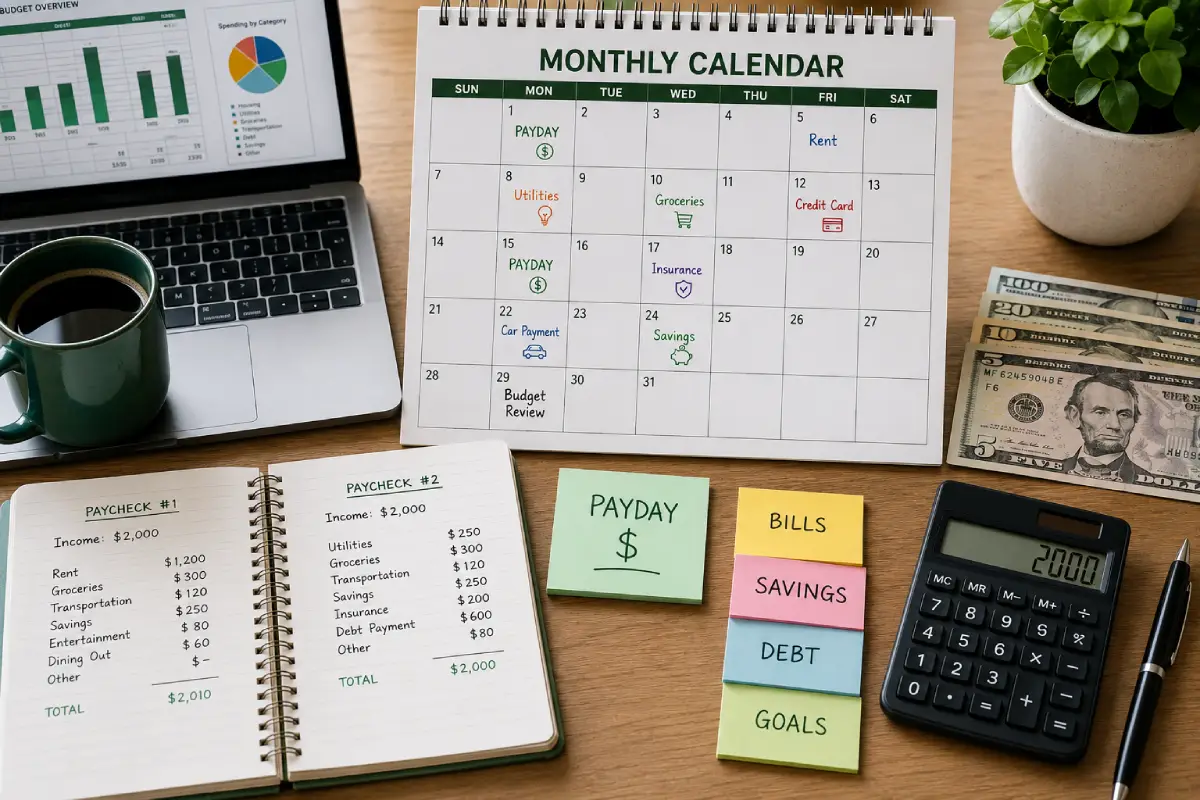
    Step 5: Create a paycheck-by-paycheck spending plan

    The easiest way to stay organized is to give every paycheck a job before it arrives. This prevents impulse spending and ensures your most important expenses are always covered first.

    Start by listing your expected income, followed by essential bills, savings goals and flexible spending.

    Category Paycheck #1 Paycheck #2
    Housing $1,200
    Utilities $250
    Groceries $300 $300
    Transportation $120 $120
    Savings $250 $250
    Entertainment $80 $80
    Dining Out $60 $60

    This approach keeps both paychecks balanced and prevents one week from becoming financially overwhelming.

    Build a buffer between paychecks

    One of the biggest goals of a biweekly budget is creating breathing room.

    Instead of spending every dollar before your next payday, aim to leave a small cash buffer in your checking account.

    Even a few hundred dollars can prevent overdraft fees and reduce financial anxiety.

    Smart strategy

    Use the first extra paycheck each year to build your emergency fund. Use the second extra paycheck to pay off debt or invest.

    What if your bills don’t match your paydays?

    This is completely normal.

    The solution is simple:

    • Pay part of next month’s bills from the current paycheck.
    • Create sinking funds for irregular expenses.
    • Keep a small cash reserve in checking.
    • Automate recurring transfers after payday.

    Eventually your budget begins working ahead instead of catching up.

    Common mistakes people make

    Spending the first paycheck too quickly

    The excitement of payday often leads to unnecessary purchases. Plan every dollar before it reaches your account.

    Ignoring the third paycheck

    The two “extra” paychecks each year are one of the biggest financial advantages of a biweekly schedule. Don’t waste them.

    Not adjusting for irregular expenses

    Car repairs, holidays and annual insurance premiums should always appear in your budget.

    Never reviewing your plan

    Your budget should evolve as your income and expenses change.

    Who benefits most from a biweekly budget?

    • Employees paid every other Friday.
    • Healthcare workers.
    • Government employees.
    • Teachers.
    • Factory workers.
    • Anyone with predictable biweekly income.

    Related budgeting guides

    Bottom line

    A biweekly budget helps you organize your finances around the way you’re actually paid instead of forcing your income into a traditional monthly system. By planning each paycheck, assigning bills before spending and using extra paychecks strategically, you’ll reduce stress and gain far greater control over your money.

    The goal isn’t just surviving until your next payday—it’s building a financial system that allows every paycheck to move you closer to your long-term goals.

    Frequently asked questions

    How many paychecks do biweekly employees receive?

    Most people paid every two weeks receive 26 paychecks each year.

    How many months have three paychecks?

    Usually two months each year include a third paycheck, although this depends on your payroll calendar.

    Should I budget monthly or biweekly?

    If you’re paid every two weeks, budgeting by paycheck is often easier because it matches your actual cash flow.

    What should I do with my third paycheck?

    Prioritize emergency savings, debt repayment, retirement investing or sinking funds before increasing discretionary spending.

    Can I combine a biweekly budget with the 50/30/20 rule?

    Yes. Many people split each paycheck according to the 50/30/20 percentages while still planning around their biweekly pay schedule.
  • Budget calendar: How to plan your monthly finances like a pro

    Budget calendar: How to plan your monthly finances like a pro

    A budget is much easier to follow when you know exactly when money comes in and when it goes out. That’s where a budget calendar becomes one of the most valuable financial planning tools.

    Instead of reacting to bills as they arrive, a budget calendar helps you plan ahead, avoid late fees, reduce financial stress and make smarter decisions throughout the month.

    Whether you’re living paycheck to paycheck or simply want more control over your finances, creating a budget calendar takes less than an hour and can completely change how you manage your money.

    Key takeaways

    • A budget calendar shows income, bills and savings in one place.
    • Planning expenses before payday reduces financial stress.
    • Never miss due dates or late payment fees.
    • Review your calendar weekly instead of only at the end of the month.
    • Combine your calendar with a monthly budget for the best results.

    What is a budget calendar?

    A budget calendar is a monthly planning tool that combines your income, bills, savings goals and important financial dates into one easy-to-read schedule.

    Unlike a traditional budget spreadsheet that focuses only on numbers, a budget calendar focuses on timing.

    Knowing when money enters and leaves your account helps prevent overdrafts, missed payments and unnecessary stress.

    Think of it as a financial roadmap for the month ahead.

    Why a budget calendar works

    Many people know how much they earn and roughly how much they spend, but they still struggle financially because they don’t pay attention to timing.

    For example:

    • Your paycheck arrives on the 15th.
    • Your rent is due on the 16th.
    • Your credit card payment is due on the 18th.
    • Your car insurance renews on the 20th.

    If you aren’t planning ahead, it becomes easy to overspend during the first few days after payday.

    A budget calendar removes this uncertainty by showing every important financial event before it happens.

    Benefits of using a budget calendar

    • Pay bills on time.
    • Avoid late fees.
    • Reduce overdraft charges.
    • Plan savings automatically.
    • Improve cash flow.
    • Reduce financial anxiety.
    • Prepare for irregular expenses.

    Pro tip

    The best time to prepare your budget calendar is a few days before a new month begins—not after you’ve already started spending.

    What should be included in a budget calendar?

    Your calendar should include every important financial event.

    Include Examples
    Income Salary, freelance income, bonuses
    Bills Rent, utilities, subscriptions
    Debt payments Credit cards, personal loans
    Savings Emergency fund, investing
    Annual expenses Insurance, vehicle registration
    Financial reminders Monthly budget review

    The more complete your calendar is, the easier it becomes to stay organized.

    Step 1: Mark every payday

    Always begin with your income.

    Highlight every payday during the month.

    If you’re paid:

    • Weekly
    • Biweekly
    • Twice per month
    • Monthly
    • Irregularly

    Your calendar should clearly identify those dates.

    Everything else is planned around your income.

    Step 2: Add fixed bills

    Next, enter every recurring monthly expense.

    • Rent or mortgage
    • Electricity
    • Water
    • Internet
    • Phone
    • Streaming services
    • Insurance
    • Loan payments

    These are predictable expenses that rarely change.

    Adding them first makes planning much easier.

    Step 3: Schedule savings first

    One of the biggest mistakes people make is saving whatever money is left at the end of the month.

    Instead, schedule savings immediately after payday.

    This approach—often called Pay Yourself First—helps build consistency and prevents spending your savings before you’ve had a chance to set them aside.

    For example:

    • Payday: July 1
    • Emergency fund transfer: July 2
    • Investment contribution: July 2
    • Vacation fund: July 3

    Automating these transfers makes the process even easier.

    Step 4: Add irregular expenses

    Not every bill arrives every month.

    Your budget calendar should also include expenses such as:

    • Annual insurance premiums
    • Car maintenance
    • Holiday shopping
    • Birthdays
    • School supplies
    • Medical appointments
    • Property taxes

    Adding these dates early helps prevent unpleasant surprises later in the year.

    In the next section, we’ll build a complete monthly budget calendar, explain weekly reviews, show common mistakes to avoid and provide a practical template you can copy for your own finances.

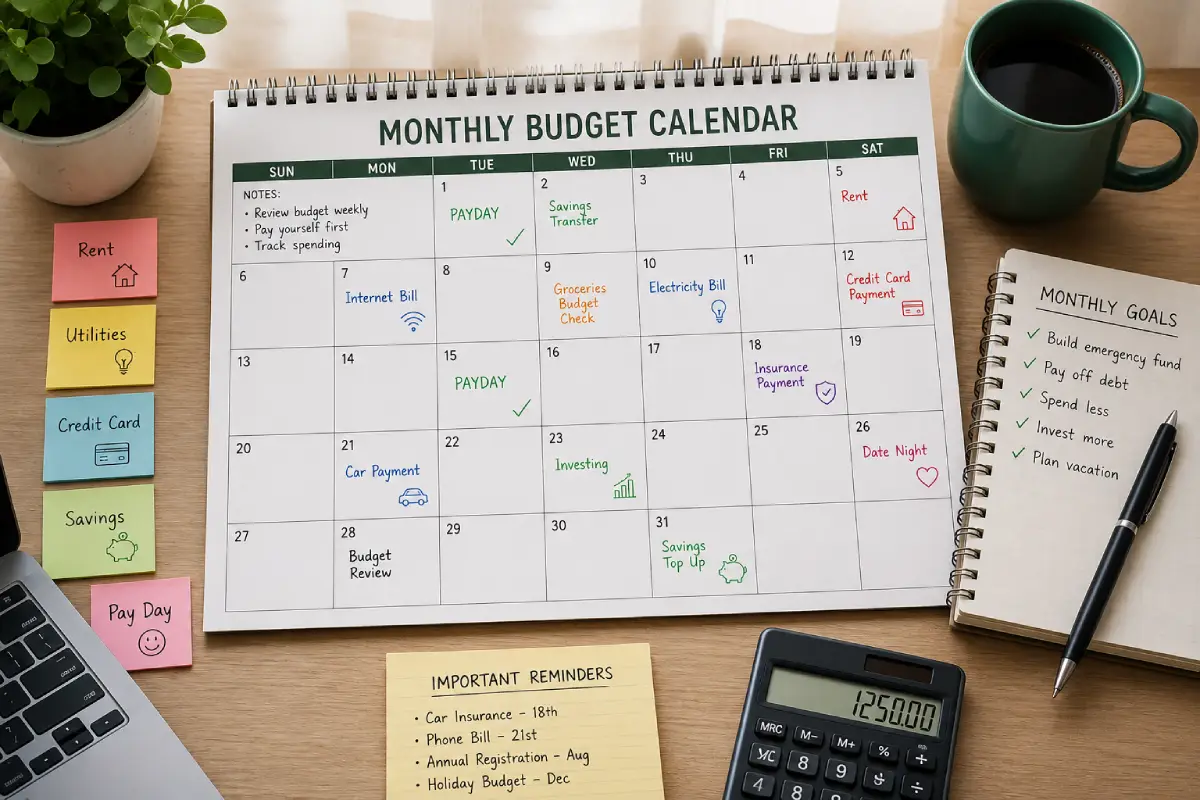
    Step 5: Build your monthly budget calendar

    Once you’ve added your income, recurring bills, savings contributions and irregular expenses, it’s time to put everything together into one monthly calendar.

    Your goal isn’t simply to know what you’ll spend—it’s to know exactly when you’ll spend it.

    Date Financial event Status
    1 Payday Income
    2 Emergency fund transfer Automatic
    3 Investment contribution Automatic
    5 Rent payment Due
    8 Internet bill Due
    10 Electricity bill Due
    12 Credit card payment Due
    15 Second paycheck Income
    18 Groceries Budget review
    22 Insurance payment Due
    28 Monthly budget review Review

    Review your calendar every week

    A budget calendar shouldn’t be something you only check at the beginning of the month.

    Spend five to ten minutes every week reviewing upcoming expenses.

    Ask yourself:

    • Are all bills covered?
    • Did any unexpected expenses appear?
    • Can I move money between categories?
    • Do I need to reduce discretionary spending?
    • Am I still on track with my savings goal?

    Weekly reviews make small adjustments before they become large financial problems.

    Smart habit

    Choose the same day every week—Sunday evening is popular—to review your calendar and prepare for the week ahead.

    Digital vs. paper budget calendars

    There isn’t a single correct way to manage a budget calendar.

    Digital calendar Paper planner
    Automatic reminders Easy to personalize
    Works on every device No technology required
    Easy recurring events Many people remember better when writing
    Simple updates Provides a visual overview

    Many people combine both—a digital calendar for reminders and a paper planner for monthly planning.

    Common mistakes to avoid

    Only writing down bills

    Your calendar should also include income, savings transfers and financial reviews.

    Ignoring annual expenses

    Insurance renewals, holiday shopping and vehicle registration should appear months before they’re due.

    Not updating the calendar

    Your financial situation changes throughout the year. Review and update your calendar regularly.

    Trying to remember everything

    The purpose of a budget calendar is to reduce mental stress—not increase it.

    Write everything down.

    Who should use a budget calendar?

    A budget calendar is useful for almost everyone, but it’s especially valuable if you:

    • Have multiple paychecks each month.
    • Live paycheck to paycheck.
    • Manage household finances.
    • Frequently forget bill due dates.
    • Want to improve your savings habits.
    • Have irregular income.

    Related budgeting guides

    Bottom line

    A budget calendar is one of the simplest financial tools you can create, yet it has a powerful impact on your day-to-day money management. By planning income, bills, savings and important financial dates in advance, you reduce stress and gain greater confidence in your financial decisions.

    Start with your paydays, schedule essential bills, automate savings and review your calendar every week. Over time, this simple habit can help you avoid late fees, improve cash flow and make budgeting feel much more manageable.

    Frequently asked questions

    What is the purpose of a budget calendar?

    A budget calendar helps you organize income, bills, savings and important financial dates so you always know what payments are coming next.

    Should I use a paper or digital budget calendar?

    Both work well. Digital calendars provide reminders, while paper planners offer a clear visual overview. Many people use both together.

    How often should I review my budget calendar?

    A quick weekly review and a more detailed monthly review are enough for most households.

    Can a budget calendar help me save money?

    Yes. Planning ahead helps prevent late fees, impulse spending and missed savings contributions.

    Is a budget calendar different from a monthly budget?

    Yes. A monthly budget focuses on how much you plan to spend, while a budget calendar focuses on when income and expenses occur throughout the month.