Tag: travel money

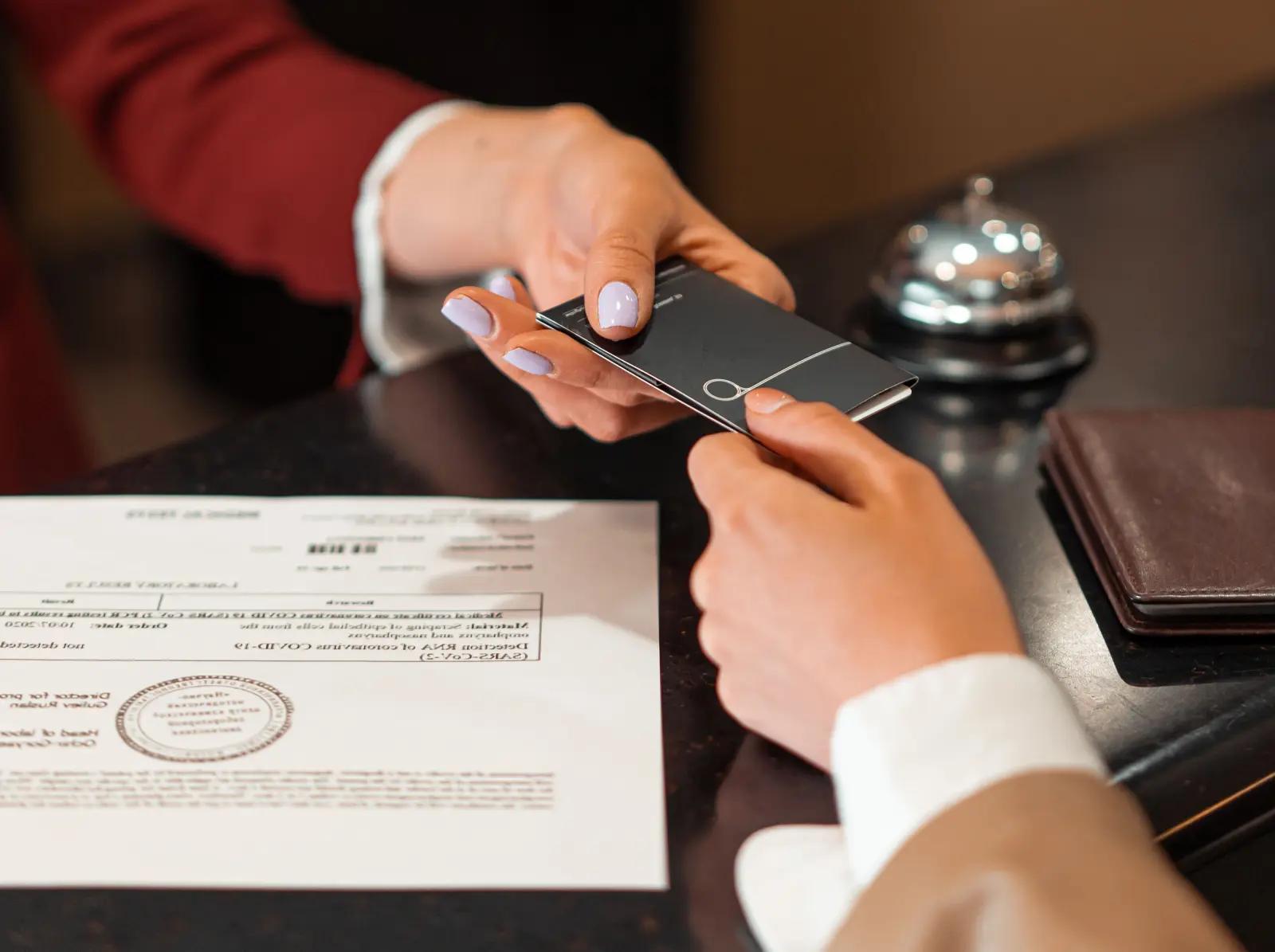
  • The hotel check-in card trap: Why a debit card can lock up hundreds for days

    The hotel check-in card trap: Why a debit card can lock up hundreds for days

    Your hotel is already paid.

    You arrive at reception, hand over your passport and hear:

    “We just need a card for incidentals.”

    No problem.

    You tap your debit card.

    A few minutes later, €300, €500 or even more appears to be missing from your available balance.

    You did not spend it.

    The hotel did not necessarily charge it.

    The money is simply unavailable.

    Welcome to the hotel authorization hold.

    And if you are travelling with a debit card and a limited amount of cash in your bank account, this seemingly harmless check-in procedure can create a surprisingly serious problem.

    A hotel deposit is not always a charge

    Hotels commonly place an authorization hold on a payment card at check-in.

    It can cover things such as:

    • room and taxes
    • minibar
    • food and drinks
    • parking
    • room service
    • damage
    • other incidental expenses

    Marriott’s current digital-entry terms say that at check-in the issuing bank may place a hold covering room and tax, applicable resort fees and an additional amount for incidentals.

    Hilton similarly explains that even guests who have already prepaid their stay may still have a card hold placed for incidentals at check-in.

    That distinction is important.

    You can have:

    HOTEL ROOM
    Already paid: €700
    
    AND
    
    CHECK-IN HOLD
    Temporarily reserved: €300

    Your hotel did not suddenly become €1,000.

    But for a period of time, you may need access to €1,000 of financial capacity.

    Why debit cards create the bigger problem

    An authorization can happen on both credit and debit cards.

    The practical difference is where the hold lands.

    Credit card

    A €400 authorization generally reduces your available credit.

    Example:

    Credit limit:       €4,000
    Hotel hold:           €400
    
    Available credit:   €3,600

    Your current-account cash has not disappeared.

    Debit card

    The same hold can affect money directly associated with your bank account.

    Example:

    Account balance:    €1,200
    Hotel hold:           €400
    
    Available funds:      €800

    You still technically have the money.

    But you may not be able to spend it.

    Some Hyatt properties state this extremely clearly in their policies: debit-card authorization funds are shown as pending and therefore become unavailable to the guest. Some also recommend using a credit card at check-in and a debit card to settle the final balance at checkout.

    That is the travel trick.

    The problem is often not the cost of the hotel. It is temporary access to your own money.

    The €500 example

    Imagine a five-night holiday.

    You prepaid:

    Hotel: €750

    So you arrive with:

    Bank account: €1,500

    You expect the €1,500 to cover:

    Restaurants
    Transport
    Shopping
    Activities
    Emergency money

    At check-in, the hotel authorizes:

    €100 per night
    ×
    5 nights
    =
    €500

    Your available cash can suddenly become:

    €1,500
    -
    €500
    =
    €1,000

    Nothing has actually been purchased with that €500.

    But for practical purposes during the holiday:

    You cannot use it.

    That is a very different problem from a €500 expense.

    The hold may survive your checkout

    Here is where many travellers become confused.

    You check out.

    The receptionist tells you:

    “We have released the deposit.”

    You check your banking app.

    The money is still unavailable.

    Both statements can be true.

    The hotel can release the authorization from its side, but your issuing bank may need additional time before the funds become available again.

    Marriott currently says its check-in hold may remain until the issuing bank releases it, with its digital-entry terms referring to up to five business days after departure.

    IHG says that for a card linked to a bank or checking account, held funds may remain unavailable for at least 72 hours after checkout or longer depending on the financial institution.

    Hilton says its hold is generally released after checkout within 72 hours, while noting that the card provider may take longer.

    And some Hyatt properties warn debit-card customers that released authorizations may take 7–10 business days, potentially longer depending on the bank.

    So:

    Hotel releases hold
    ≠
    Money immediately available

    The road-trip problem is even worse

    Imagine a ten-day trip:

    Hotel A: 3 nights
    Hotel B: 3 nights
    Hotel C: 4 nights

    Each places approximately:

    €250 hold

    You leave Hotel A.

    Its €250 has not yet returned.

    You check into Hotel B.

    Another:

    €250

    gets blocked.

    Then you reach Hotel C before the first authorization has completely disappeared.

    In the wrong timing scenario, you might temporarily have:

    Hotel A: €250
    Hotel B: €250
    Hotel C: €250
    
    TOTAL:
    €750

    tied up.

    Again:

    You have not spent €750.

    But you may temporarily be unable to use it.

    For someone travelling with €1,500–€2,000 in their main account, that matters.

    Prepaid hotel does not automatically solve it

    This is probably the biggest misconception.

    You show reception:

    “But I already paid for the hotel.”

    That does not necessarily eliminate the incidental hold.

    Hilton’s current FAQ specifically addresses this situation: even when accommodation has been prepaid, a hotel may still require a card at check-in and place a hold for incidentals such as food, drink, parking and other charges.

    Think of them as two separate things:

    ROOM PAYMENT
    =
    What you owe for accommodation
    
    INCIDENTAL AUTHORIZATION
    =
    Security against additional spending

    Paying one does not automatically eliminate the other.

    The question to ask BEFORE handing over your card

    Instead of simply asking:

    “Do you need my card?”

    ask:

    “How much will you authorize on the card?”

    That one sentence can save a lot of confusion.

    Even better:

    “Is the authorization per night or per stay?”

    Because these two policies are very different.

    Example A:

    €50 per stay
    =
    €50

    Example B:

    €50 per night
    ×
    7 nights
    =
    €350

    You want to know that before tapping the card.

    Ask how long the release normally takes

    Second question:

    “When you release the authorization at checkout, how long can it remain pending?”

    The hotel cannot guarantee your bank’s processing time.

    But it can explain its own procedure.

    Now you know whether you are potentially dealing with:

    hours

    or:

    several business days

    That becomes especially important if another hotel, rental-car company or cruise line will require a deposit immediately afterwards.

    Rental cars can create the same problem

    Hotels are not the only travel businesses using deposits.

    Rental-car companies can require much larger authorization amounts.

    For example, Enterprise’s current Skopje Airport terms list security deposits ranging from €290 to €1,000 depending on vehicle category, and state that the deposit there must be provided using a valid credit card.

    So imagine the combination:

    Hotel hold:       €400
    Rental car hold:  €390
    
    TOTAL CAPACITY:
    €790

    before you have bought lunch.

    This is why payment-card planning should be part of trip planning.

    Not something you think about while standing at reception.

    The Fintayo two-card travel setup

    A practical setup is:

    Card 1 — check-in / deposits

    Preferably a suitable credit card with enough available limit, where accepted.

    Use it for:

    Hotel authorization
    Rental-car deposit
    Other security holds

    Card 2 — daily spending

    Use another card for:

    Food
    Transport
    Shopping
    Tickets
    Cash withdrawals

    Why?

    Because if one card accumulates large pending authorizations, you still have a separate source of everyday spending capacity.

    It also gives you redundancy if:

    A card is declined
    A card is lost
    A bank fraud system blocks it
    A terminal does not accept that card

    But do not blindly use a credit card

    There is an important qualification.

    A credit card is useful only if:

    The hotel accepts it
    You have sufficient available limit
    You understand its fees
    You can pay the balance responsibly

    A €500 hold on a card with only:

    €700 available limit

    still creates a problem.

    After authorization:

    €200 available

    The issue has simply moved from your bank balance to your credit limit.

    The Fintayo rule is therefore not:

    Credit cards are always better.

    It is:

    Do not use the account containing your day-to-day travel cash for a large authorization unless you understand the consequences.

    Do not use your only card

    This is one of the simplest travel mistakes to avoid.

    You travel with:

    One debit card

    It contains:

    All holiday money

    Then:

    Hotel freezes part of it

    and later:

    Bank blocks a suspicious transaction

    Now you have one problem and no backup.

    For international trips, two independent payment methods are far safer than one.

    Ideally, do not keep both in the same wallet.

    The checkout trick

    Some hotel policies explicitly recommend a useful strategy:

    Credit card
    → authorization at check-in
    
    Debit card
    → final payment at checkout

    Some Hyatt properties currently make exactly this recommendation to debit-card users.

    Why can this work?

    The credit card absorbs the temporary hold.

    At checkout, you tell reception:

    “I’d like to settle the final bill with this debit card.”

    The hotel processes the actual bill.

    The authorization on the credit card is released according to the hotel’s and issuer’s process.

    Your checking-account funds were not tied up for the entire stay.

    But always confirm the property allows changing the payment method at checkout.

    Photograph or keep the final hotel bill

    Do not walk away with nothing.

    Ask for the final folio or invoice showing:

    Room
    Taxes
    Extras
    Final payment
    Balance due: 0

    If the authorization remains pending for an unusually long period, you now have documentation showing the stay was settled.

    Marriott advises guests with billing discrepancies to contact the property and retain updated hotel-bill documentation when corrections are made.

    That is far more useful than telling your bank:

    “The receptionist said everything was fine.”

    The Fintayo check-in script

    At reception, ask:

    Before I provide the card,
    how much will you authorize?

    Then:

    Is that amount per night
    or for the entire stay?

    Then:

    When you release it,
    how long can it remain pending?

    And if you have both debit and credit cards:

    Can I use this card for the authorization
    and another card for the final bill?

    Four questions.

    Thirty seconds.

    Potentially hundreds of euros of liquidity protected.

    The €1,000 holiday cash-flow test

    Before travelling, calculate:

    Available trip money:
    €________
    
    Hotel authorization:
    €________
    
    Rental-car deposit:
    €________
    
    Other deposits:
    €________
    
    TOTAL TEMPORARILY UNAVAILABLE:
    €________

    Then:

    Available trip money
    -
    temporary holds
    =
    money actually available to spend

    Example:

    Bank balance:          €2,000
    
    Hotel hold:              €400
    Rental car:              €390
    
    Actually accessible:
    €1,210

    That is the number you should build the trip around.

    Not €2,000.

    Do this before a long trip

    If the hotel website does not clearly publish its authorization policy, send a message before travelling:

    “Could you confirm the card authorization/deposit required at check-in, whether it is per night or per stay, and the usual release process after checkout?”

    This matters particularly for:

    • expensive resorts
    • long stays
    • multiple hotels
    • car rentals
    • cruises
    • travellers relying primarily on debit cards
    • trips where your bank balance is close to your planned budget

    The Fintayo takeaway

    A hotel authorization hold is not necessarily a hidden fee.

    It is a cash-flow problem.

    And on a debit card, cash flow matters because the hold can make real money in your account temporarily unavailable.

    So before hotel check-in, remember:

    Ask the hold amount.
    Ask whether it is per night.
    Ask how release works.
    Keep daily spending money separate.
    Carry a backup payment method.

    The hotel room may already be paid.

    Your account can still lose access to hundreds for several days.

    And discovering that while standing in another country with dinner, transport and the rest of the trip still ahead is a travel trick worth avoiding.

  • Always choose local currency? The card terminal trick that can cost you 5% more

    Always choose local currency? The card terminal trick that can cost you 5% more

    You are in Prague.

    Dinner costs:

    1,250 CZK

    You tap your card.

    The terminal suddenly asks:

    PAY IN:
    
    1,250 CZK
    
    or
    
    €55.80

    The euro option feels safer.

    You immediately understand the amount.

    No mental conversion.

    No uncertainty about what your bank will charge later.

    So you press:

    EUR

    And that small decision may make the dinner more expensive.

    What the terminal is offering is usually Dynamic Currency Conversion, or DCC.

    Instead of letting your bank or card network convert the purchase later, the merchant’s payment provider converts it immediately into your card’s home currency.

    Convenient?

    Yes.

    Usually cheaper?

    Not necessarily.

    Visa currently warns that DCC may include an exchange-rate markup and additional fees, and separately notes that using DCC while travelling can often mean roughly a 3–5% markup through the exchange rate.

    That means one button on a payment terminal can turn a €1,000 holiday spend into an additional €30–€50.

    Without buying anything extra.

    What actually happens when you choose local currency?

    Suppose you are in Hungary and the restaurant bill is:

    40,000 HUF

    You choose:

    40,000 HUF

    The merchant sends the transaction in Hungarian forints.

    Your card issuer then converts it into the currency of your account according to the applicable card-network or bank terms.

    Mastercard, for example, provides its own currency-conversion calculator and notes that the relevant conversion can depend on when the transaction is authorized or processed, together with any fee charged by your issuing bank.

    Your statement might eventually show something like:

    40,000 HUF
    → €102.40

    The important point is:

    The merchant did not perform the currency conversion.

    Your own payment chain did.

    What happens when you choose your home currency?

    Now choose:

    €107.50

    instead.

    The merchant or its payment provider performs the conversion before sending the transaction.

    You have accepted DCC.

    Mastercard explicitly notes that when a transaction is converted by the merchant or ATM operator — commonly when you choose your card’s currency instead of the merchant’s — Mastercard’s own currency-conversion rate does not apply.

    So the choice is not merely:

    HUF vs EUR

    It is more accurately:

    Bank/card-network conversion
    
    vs
    
    Merchant/payment-provider conversion

    And those rates may be very different.

    The 5-second Fintayo rule

    When travelling abroad and a terminal asks:

    HOME CURRENCY
    
    or
    
    LOCAL CURRENCY

    our default rule is:

    Choose the local currency.

    Examples:

    In Croatia:

    EUR

    In Albania:

    ALL

    In Serbia:

    RSD

    In Turkey:

    TRY

    In the UK:

    GBP

    In Switzerland:

    CHF

    The principle is simple:

    Pay the merchant in the currency in which the merchant normally prices the purchase.

    Then allow your own card issuer/payment network to handle the conversion.

    There are exceptions, which we will get to.

    But this is the safer default.

    Why the euro button is so tempting

    DCC is psychologically clever.

    Imagine the terminal displays:

    4,250 TRY

    You may have no immediate intuition whether that is:

    €80
    €95
    €110

    Then the terminal offers:

    €92.64

    Suddenly everything feels clear.

    The home-currency number removes uncertainty.

    But clarity is not the same as value.

    You are effectively being offered:

    “Would you like us to calculate the exchange rate for you?”

    The correct response is:

    “At what rate?”

    Visa requires DCC merchants and ATMs to disclose the exchange rate, the local and home-currency amounts and applicable markup or fees, and says the cardholder must be allowed to accept or decline the conversion.

    The EU also requires providers offering point-of-sale currency conversion to disclose the conversion markup and show both the merchant-currency and payer-currency amounts before the transaction begins.

    So the information may be there.

    The problem is that most travellers do not stop to calculate it.

    The €1,000 holiday example

    Suppose DCC costs 4% more than the alternative conversion.

    Your trip spending:

    Hotels:       €400 equivalent
    Restaurants:  €250
    Shopping:     €200
    Transport:    €100
    Other:         €50
    
    Total:      €1,000

    Extra cost:

    €1,000 × 4%
    =
    €40

    Nothing dramatic happened.

    No scam notification.

    No giant fee appeared.

    You simply paid:

    €40

    more for the same trip.

    At 5%:

    €1,000 × 5%
    =
    €50

    For a family spending €3,000 abroad:

    €3,000 × 5%
    =
    €150

    That is why small exchange-rate differences deserve attention.

    The terminal may use reassuring language

    You may see wording such as:

    Guaranteed exchange rate

    or:

    Pay conveniently in EUR

    or:

    Know exactly what you pay

    Those statements can be technically true.

    DCC can tell you exactly how many euros will hit your card for that transaction.

    But you are paying for that certainty through the offered conversion rate if it is worse than your alternative.

    The question is not:

    Is the rate guaranteed?

    The question is:

    Is the guaranteed rate good?

    Sometimes the choice looks backwards

    Terminals are not always intuitive.

    You may see:

    WITH CONVERSION
    
    WITHOUT CONVERSION

    instead of:

    EUR
    
    CZK

    The option labelled:

    WITHOUT CONVERSION

    can actually be the one you want because it leaves the transaction in local currency.

    Always identify the currency itself.

    Do not rely only on button wording.

    Good

    PAY 1,250 CZK

    Usually avoid

    PAY €55.80
    Exchange rate guaranteed

    when your home account is denominated in euros.

    What if your bank charges a foreign transaction fee?

    This is the major caveat.

    Suppose your card issuer charges:

    3%

    for foreign-currency purchases.

    And the DCC markup is:

    2%

    In that particular transaction, DCC could theoretically be competitive or even cheaper.

    That is why the rule is not mathematically:

    Local currency always wins.

    It is:

    Local currency is usually the best starting choice unless you know your own card’s FX costs and can prove the offered conversion is better.

    You need to know:

    Card network conversion
    +
    issuer FX markup
    +
    foreign transaction fee

    versus:

    DCC exchange rate
    +
    DCC markup/fees

    Most travellers cannot calculate that accurately while a waiter is holding the terminal.

    Hence the practical default:

    Local currency

    The two-card strategy

    Frequent travellers can make this easier.

    Use:

    Card A — Travel card

    Low or zero FX markup
    No foreign transaction fee

    Use this abroad in:

    local currency

    Card B — Backup card

    Keep it separately for:

    • declined transactions
    • lost cards
    • offline terminals
    • emergencies

    Now you no longer need to perform a currency calculation every time you pay for coffee.

    The operating rule becomes:

    Travel card + local currency

    Do not confuse card currency with nationality

    Suppose you are Macedonian but your card account is in euros.

    You are shopping in Serbia.

    Terminal asks:

    RSD
    
    or
    
    EUR

    The relevant comparison is based on your card/account currency and its conversion terms, not your passport.

    Likewise, someone living in Germany might use:

    • a euro account
    • a dollar card
    • a multicurrency wallet

    The correct answer depends on the funding currency and card terms.

    Multicurrency cards make the terminal question even more important

    Suppose your fintech account holds:

    EUR
    GBP
    USD
    CHF

    and you pay in Switzerland.

    If you already hold Swiss francs or your provider offers a competitive CHF conversion, selecting:

    CHF

    at the terminal gives your own provider the chance to settle according to your account setup.

    If you instead choose:

    EUR

    through DCC, the merchant’s conversion occurs first.

    Your sophisticated multicurrency setup may never get a chance to do the thing you opened it for.

    The receipt can reveal what happened

    After payment, inspect the receipt.

    A DCC receipt may display:

    Transaction currency: CZK
    
    Cardholder currency: EUR
    
    Exchange rate:
    ...
    
    Markup:
    ...

    EU rules require currency-conversion providers in scope to disclose the markup over the relevant reference rate, while Visa rules require disclosure of the conversion details and active cardholder choice.

    If you intended to pay in local currency but your receipt shows the purchase was converted into your home currency, act quickly.

    Visa says merchants must give cardholders the opportunity to pay in local currency, and customers should contact their issuer if a transaction was converted without permission.

    Never let the merchant choose for you

    You say:

    Card, please.

    The waiter takes your card.

    The terminal returns already processed in euros.

    That should not happen without your choice.

    Visa explicitly states that merchants or ATMs offering DCC should not select the conversion on behalf of the cardholder.

    A simple sentence solves most situations:

    Please charge me in local currency.

    Use it before the card is tapped.

    In Turkey:

    Turkish lira, please.

    In Poland:

    Polish zloty, please.

    In Hungary:

    Forints, please.

    You do not need to explain DCC theory at the restaurant.

    The hotel checkout is where this gets expensive

    A bad conversion on coffee costs cents.

    A bad conversion on a hotel can cost serious money.

    Hotel bill:

    €1,500 equivalent

    DCC disadvantage:

    4%

    Cost:

    €60

    At 5%:

    €75

    The same applies to:

    • rental cars
    • medical bills
    • jewellery
    • electronics
    • luxury shopping
    • large deposits

    The larger the purchase, the more important the currency button becomes.

    Watch pre-authorizations too

    Hotels and rental-car companies often place deposits or holds.

    Ask which currency will be used for:

    Final purchase
    
    and
    
    pre-authorization

    because the temporary hold may also interact with currency conversion and your available balance.

    Do not focus exclusively on the final invoice while ignoring a large deposit.

    Online shops can use the same psychology

    DCC is not limited to physical terminals.

    An international website may offer:

    View prices in EUR

    instead of the merchant’s original currency.

    This may be convenient.

    But once again, ask:

    Who is performing the conversion?

    Visa’s merchant guidance recommends transparent currency disclosure and an easy way for customers to switch back to the merchant’s local currency when currency-conversion services are offered.

    So when buying internationally online, compare:

    Original currency checkout

    with:

    Converted EUR checkout

    before paying.

    The phone-calculator trick

    You do not need to memorize exchange rates.

    Suppose the terminal offers:

    Local price:
    12,000 HUF
    
    DCC price:
    €32.80

    Your phone indicates roughly:

    12,000 HUF ≈ €30.80

    Difference:

    €2

    Percentage difference:

    €2 ÷ €30.80
    ≈ 6.5%

    Now the convenience has a visible price.

    You can make the decision in seconds.

    The Fintayo €10 rule

    For a tiny transaction:

    Coffee: €4 equivalent

    even a 5% disadvantage is:

    €0.20

    Do not ruin your holiday performing forensic accounting over every espresso.

    But once a transaction exceeds:

    €100

    pay attention.

    At €100:

    5% = €5

    At €500:

    5% = €25

    At €2,000:

    5% = €100

    The larger the transaction, the less excusable an unnecessary conversion becomes.

    Fintayo’s card-abroad checklist

    Before the trip:

    CARD:
    
    Account currency:
    
    Foreign transaction fee:
    
    Issuer FX markup:
    
    ATM fee:
    
    Travel notifications required:
    [Yes / No]
    
    ================================
    
    WHEN TERMINAL ASKS:
    
    LOCAL CURRENCY
    or
    HOME CURRENCY
    
    Default:
    LOCAL CURRENCY
    
    ================================
    
    BEFORE CONFIRMING:
    
    [ ] Check currency symbol
    [ ] Decline DCC unless proven cheaper
    [ ] Verify amount
    [ ] Keep receipt for large purchase
    
    ================================
    
    FOR LARGE TRANSACTIONS:
    
    Local amount:
    
    DCC amount:
    
    Approximate market conversion:
    
    Difference:
    
    Percentage difference:
    
    ================================
    
    DECISION:
    
    [ ] Local currency
    [ ] DCC — demonstrably cheaper

    Three phrases worth remembering

    Restaurant

    Please charge the card in local currency.

    Hotel

    Please process the payment in local currency, without currency conversion.

    If the terminal has already converted it

    Please cancel that transaction and charge it again in local currency.

    Short.

    Clear.

    No banking lecture necessary.

    The Fintayo takeaway

    When a card terminal abroad asks whether you want to pay in your own currency, it is not simply translating the number for you.

    It may be offering a separate currency-conversion service.

    Visa says DCC can include additional fees and markup, and its current consumer guidance notes that the convenience can often carry a roughly 3–5% markup.

    So the default Fintayo rule is simple:

    When abroad, pay in the merchant’s local currency and let your own card issuer handle the conversion.

    Not because local currency is mathematically guaranteed to win every single transaction.

    But because accepting DCC means giving the merchant’s payment provider control of the exchange rate.

    And unless you have compared both conversion costs, that is usually a bet you do not need to make.

    The expensive button is often the one designed to look most convenient.

  • Never choose this ATM option abroad: The currency conversion trap

    Never choose this ATM option abroad: The currency conversion trap

    You are standing at an ATM in another country, trying to withdraw cash before a taxi arrives.

    The machine offers two choices:

    Withdraw 20,000 HUF with conversion

    or

    Continue without conversion

    One option displays the exact amount that will be charged in your home currency. The other leaves the final conversion to your card issuer.

    The first option looks safer. It gives you a familiar number, promises a “guaranteed exchange rate” and may even warn that choosing the other button means the rate is unknown.

    That convenience has a name: dynamic currency conversion, or DCC.

    And it can make an ordinary cash withdrawal significantly more expensive.

    Visa describes DCC as a service that lets a merchant or ATM convert a foreign transaction into the cardholder’s home currency at the point of payment. When it is offered, the screen should show the amount in both currencies, the exchange rate and any additional markup or fees.

    The important question is not whether the ATM can perform the conversion.

    It is who gets to choose the exchange rate.

    What happens when you accept the ATM’s conversion

    When you withdraw money abroad, the ATM normally dispenses the local currency.

    If you choose to continue in that local currency, the transaction is sent through the card network and converted according to the arrangements between the card network and your bank. Your card issuer may still charge a foreign-exchange fee, an overseas cash-withdrawal fee or both.

    If you accept DCC, the ATM operator or its conversion provider performs the currency conversion immediately. Mastercard explains that when a retailer or ATM operator converts the transaction, Mastercard’s currency-conversion rate does not apply. This commonly happens when the cardholder chooses to be charged in the currency of the card rather than the local currency of the ATM.

    In practical terms:

    • Local currency: your bank or card network handles the conversion.
    • Home currency: the ATM’s DCC provider handles the conversion.

    The second option gives the ATM operator control over the rate presented to you.

    The Fintayo example: how a small rate difference becomes a real cost

    Consider a traveler with a euro-denominated card withdrawing Polish złoty.

    This is an illustrative example, not a current market quote.

    Withdrawal calculationWithout ATM conversionWith ATM conversion
    Cash receivedPLN 1,000PLN 1,000
    Exchange rate usedPLN 4.25 per €1PLN 4.00 per €1
    Converted amount€235.29€250.00
    Difference—€14.71 more

    Both transactions produce exactly the same PLN 1,000 in cash.

    But the DCC option charges €250 instead of €235.29. That is €14.71 more before considering any separate ATM or bank fees.

    Expressed against the lower converted amount, the difference is approximately 6.25%.

    The ATM does not need to display a separate line saying “you are paying €14.71 extra.” The cost can be embedded in the exchange rate itself.

    That is why a screen showing “0% commission” does not automatically mean that the conversion is inexpensive. A provider can advertise no separate commission while still using an unfavourable exchange rate.

    The ATM may charge you in three different ways

    Travelers often treat every extra cost as a single “ATM fee,” but three separate price layers can exist.

    1. ATM operator fee

    This is the charge imposed by the company or bank that owns the cash machine.

    It may appear as:

    This ATM will charge a fee of €4.95

    That fee can exist whether you accept or decline currency conversion.

    2. Dynamic currency conversion markup

    This is the difference created by the exchange rate offered by the ATM’s DCC provider.

    It may be displayed as a percentage markup, incorporated into the quoted rate or presented through a total amount in your home currency.

    3. Your card issuer’s charges

    Your own bank may impose an overseas cash-withdrawal fee, a foreign-currency transaction charge or both. Mastercard’s currency calculator notes that a card issuer may apply additional charges and may not necessarily use Mastercard’s indicated rate when billing the customer.

    Declining DCC therefore does not guarantee a fee-free withdrawal.

    It simply prevents the ATM operator from performing the currency conversion for you.

    Which button should you press?

    For most travelers, the practical rule is:

    Choose the local currency and decline the ATM’s conversion.

    That may appear on the screen as:

    ATM wordingWhat it usually means
    Withdraw in local currencyDecline DCC
    Continue without conversionDecline DCC
    Charge in PLN, HUF, CZK, USD or local currencyDecline DCC
    Accept conversionUse DCC
    Charge in your home currencyUse DCC
    Guaranteed exchange rateUsually DCC
    Know the exact amount nowUsually DCC

    The wording is not standardized across every country or ATM network.

    Some machines use a red button for declining conversion and a green button for accepting it. Others make the DCC option larger, place it first or display warnings beside the local-currency choice.

    Do not make the decision based on the button’s color.

    Look at the currency code.

    When withdrawing cash in Poland, the local currency is PLN. In Hungary, it is HUF. In Croatia, France, Germany, Italy and other euro-area destinations, it is EUR.

    The currency dispensed by the ATM is generally the currency you want the machine to charge.

    “Without conversion” does not mean the transaction will not be converted

    This is one of the most confusing parts of the ATM screen.

    When you select “without conversion,” the transaction may still need to be converted into the currency of your card account.

    The phrase means:

    The ATM will not perform the conversion.

    Your bank or card network may perform it later instead.

    Visa and Mastercard both provide tools that can give cardholders an indication of the network conversion rate. The final amount can still vary because of timing, issuer pricing and additional fees.

    So the choice is not:

    • conversion, or
    • no conversion

    The real choice is:

    • conversion by the ATM provider, or
    • conversion through your card arrangement

    Can DCC ever be cheaper?

    It is theoretically possible for a displayed DCC rate to be competitive with the complete cost charged by a particular bank.

    For example, a card issuer may impose unusually high foreign-currency or overseas withdrawal fees. A traveler may also value knowing the exact home-currency amount immediately.

    But that does not make DCC automatically better.

    A valid comparison would require checking:

    1. the ATM’s exchange rate and markup
    2. the operator’s separate withdrawal fee
    3. your bank’s network conversion method
    4. your bank’s foreign-currency charge
    5. your bank’s cash-withdrawal fee

    Most travelers do not have all five figures available while standing at an ATM.

    That is why choosing the local currency is usually the more defensible default. Mastercard’s consumer guidance likewise advises cardholders to decline the conversion option and allow their own bank to perform the currency conversion.

    The word usually matters. The final cost depends on the card and account being used.

    European ATMs must provide more transparency

    Within the European Union, rules on cross-border payments require greater transparency when currency-conversion services are offered at an ATM or point of sale.

    Providers offering DCC for covered transactions must present the currency-conversion charge as a percentage markup over the latest available European Central Bank reference exchange rate. The information must be shown before the customer authorizes the transaction.

    This allows a traveler to see information such as:

    Markup over ECB rate: 8.4%

    That percentage is more useful than a vague statement such as “guaranteed rate.”

    But transparency does not mean the offer is inexpensive.

    It only means the additional cost should be easier to identify.

    A clearly disclosed 9% markup is still a 9% markup.

    A better ATM routine abroad

    The best time to understand your travel-card costs is before you reach the airport.

    Open your bank’s price list or mobile app and check:

    • foreign-currency card transaction fee
    • overseas ATM withdrawal fee
    • minimum cash-withdrawal charge
    • daily withdrawal limit
    • whether certain ATM networks are cheaper
    • whether your account refunds operator fees
    • whether your card uses Visa, Mastercard or another conversion arrangement

    At the ATM:

    1. Confirm that the machine belongs to a recognizable bank or established network.
    2. Check the local withdrawal fee before proceeding.
    3. Select the amount in local currency.
    4. Decline conversion into your home currency.
    5. Read the final confirmation screen before entering your PIN or confirming.
    6. Keep or photograph the receipt.
    7. Review the transaction in your banking app.

    Cancel the withdrawal if the operator fee is excessive. Trying another ATM can be cheaper, particularly when the machine is located inside or beside a bank branch.

    One large withdrawal or several smaller ones?

    Suppose an ATM charges a fixed €5 operator fee per withdrawal.

    Three withdrawals result in €15 of operator fees. One larger withdrawal results in €5.

    From a fee perspective, fewer withdrawals can be cheaper.

    But withdrawing a large amount creates other risks:

    • carrying more cash
    • theft or loss
    • local ATM limits
    • your bank’s daily limit
    • the possibility of the machine failing to dispense the correct amount

    The optimal withdrawal is not necessarily the maximum available. It is an amount that balances fixed fees against the security risk of carrying cash.

    Also avoid withdrawing more money solely because the ATM suggests a large preset amount. Preset buttons are convenient for the operator, not necessarily for your travel budget.

    What if you accepted DCC by mistake?

    Once the ATM transaction has been completed and the cash has been dispensed, reversing it may be difficult.

    Keep the receipt and take screenshots from your banking app. The receipt should ideally show:

    • the amount of local currency withdrawn
    • the amount charged in your home currency
    • the exchange rate
    • any DCC markup
    • the ATM fee
    • the ATM operator

    Contact your card issuer if:

    • the ATM did not clearly offer a choice
    • conversion was applied after you selected local currency
    • the displayed rate or amount differs from the final charge
    • the machine dispensed no cash or the wrong amount
    • you suspect an unauthorized or duplicated transaction

    Visa requires participating merchants and ATMs offering DCC to disclose the local and home-currency amounts, currency symbols, exchange rate and relevant markup or fees.

    A poor exchange rate that was properly shown and accepted is not necessarily treated the same as an unauthorized conversion. The available dispute route depends on the facts, the card scheme’s rules and your issuer’s assessment.

    The Fintayo three-second rule

    When an ATM abroad asks how you want to be charged, ignore the emotional wording and ask three questions:

    What currency will I receive?
    That is normally the local currency.

    What currency is the ATM offering to charge?
    If it is your home currency, that is likely DCC.

    Who do I want setting the rate?
    Unless you have verified that the ATM offer is genuinely better, choose the local currency and let your card arrangement handle the conversion.

    The decision takes three seconds once you know what to look for.

    The Fintayo takeaway

    The currency-conversion trap works because certainty feels valuable.

    The ATM shows an exact home-currency amount. It may promise a guaranteed rate and warn that the alternative is unknown.

    But the familiar amount does not tell you whether the rate is competitive.

    When withdrawing cash abroad:

    • select the local currency
    • decline the ATM’s conversion
    • check the operator fee separately
    • understand your own bank’s charges
    • compare the complete cost, not a single screen message

    The safest default is not “accept the rate so there are no surprises.”

    It is:

    Take the local cash in the local currency.

    The ATM can dispense the money.

    It does not also need to choose your exchange rate.

    Important: Card pricing, ATM fees, exchange rates and conversion rules vary by issuer, country and operator. Check your card’s current tariff and the information displayed by the ATM before confirming a withdrawal.