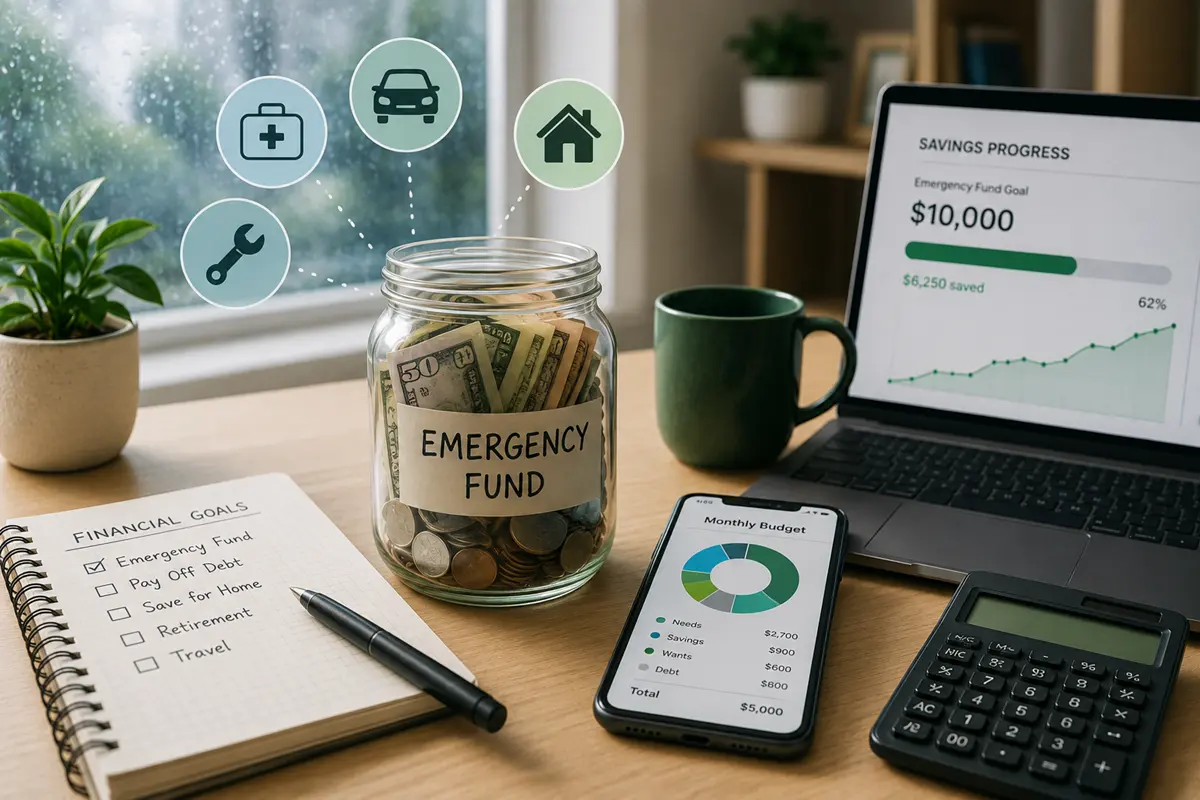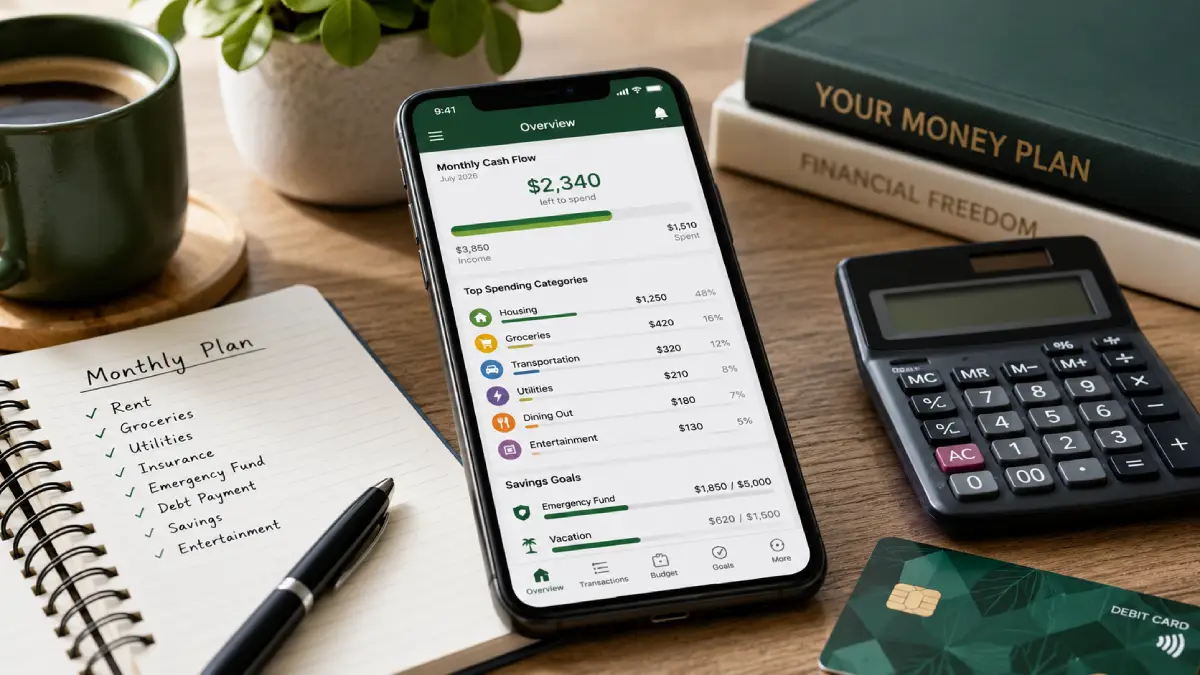
Author: branko

  • Best budgeting apps in 2026: 6 options for different money styles

    Best budgeting apps in 2026: 6 options for different money styles

    A budgeting app can organize transactions, track spending and show whether your financial plan is working. But downloading the most popular app does not automatically lead to better money habits.

    The right choice depends on how you prefer to manage money. Some people need a hands-on system that assigns every dollar before it is spent. Others want automatic account syncing, household collaboration or a quick view of how much money is safe to spend.

    This guide compares six popular budgeting apps for different types of users. Pricing and features were reviewed in July 2026 and may change, so verify current terms before subscribing.

    Quick comparison

    • YNAB: Best for active, zero-based budgeting
    • Monarch Money: Best for couples and a complete financial dashboard
    • Rocket Money: Best for subscriptions and automated spending visibility
    • EveryDollar: Best for a simple zero-based budget
    • PocketGuard: Best for controlling overspending
    • Goodbudget: Best for digital envelope budgeting

    Best budgeting apps at a glance

    App Best for Free option Typical paid price*
    YNAB Hands-on zero-based budgeting Free trial $109/year or $14.99/month
    Monarch Money Couples and complete financial tracking Free trial About $99/year
    Rocket Money Subscriptions and spending monitoring Yes Flexible Premium pricing
    EveryDollar Simple zero-based budgeting Yes Paid upgrade available
    PocketGuard Knowing what is safe to spend Limited option may be available $74.99/year or $12.99/month
    Goodbudget Envelope budgeting Yes $80/year or $10/month
    *Pricing reviewed in July 2026. Taxes, promotions, app-store pricing and available plans may vary.

    How we compared budgeting apps

    A useful budget app should make financial decisions clearer rather than adding another complicated system to maintain.

    We evaluated each option using several practical criteria:

    • Budgeting method and level of user involvement
    • Automatic bank and credit card connections
    • Transaction categorization
    • Household and partner collaboration
    • Goal and debt tracking
    • Subscription and bill monitoring
    • Availability of a free plan or trial
    • Overall complexity and learning curve
    • Value relative to the subscription cost

    No single app is the best choice for every user. A tool with extensive reports and investment tracking may be ideal for one household and unnecessarily complex for another.

    1. YNAB: Best for active zero-based budgeting

    YNAB, short for You Need a Budget, is designed around an active budgeting method in which available money is assigned to categories and financial priorities.

    Instead of only reviewing where money went after it was spent, the system encourages users to decide what their current money needs to do next.

    Who YNAB may suit

    • People who want to practice zero-based budgeting
    • Users who are willing to review and adjust categories regularly
    • Households trying to break the paycheck-to-paycheck cycle
    • Partners or families who want to share one subscription
    • People who value budgeting education and detailed guidance

    Potential drawbacks

    YNAB requires more active participation than a passive expense tracker. New users may need time to understand the method, especially when assigning money already in their accounts rather than forecasting income that has not yet arrived.

    The subscription is also relatively expensive compared with free apps and basic spreadsheets.

    YNAB pricing

    At the time of review, YNAB listed an annual subscription of $109 or a monthly subscription of $14.99. It also offered a 34-day trial. Eligible college students may qualify for a free year under the company’s student program.

    Best choice for: Users who want budgeting to be an active weekly habit rather than an automatic report.

    2. Monarch Money: Best for couples and a complete financial view

    Monarch Money combines budgeting with account aggregation, recurring expense tracking, financial goals, investment visibility and net-worth monitoring.

    It may appeal to households that want to see checking accounts, savings, credit cards, loans and investments in one dashboard.

    Who Monarch Money may suit

    • Couples managing both joint and separate accounts
    • Households that want collaborative budgeting
    • Users who want investment and net-worth tracking
    • People replacing a broad personal finance dashboard
    • Users who prefer customizable reports and categories

    Potential drawbacks

    Monarch may provide more functionality than someone needs for a simple monthly budget. It is a paid, subscription-supported product rather than a permanently free budgeting service.

    Users should also confirm that their financial institutions connect reliably before committing to an annual subscription.

    Monarch Money pricing

    Monarch advertised a paid annual plan of approximately $99 at the time of review, with a seven-day trial. Promotional pricing for new customers may occasionally be available.

    Best choice for: Couples and households that want budgeting, goals, investments and net worth in one place.

    3. Rocket Money: Best for subscriptions and spending visibility

    Rocket Money combines budgeting and transaction monitoring with tools designed to identify recurring subscriptions and bills.

    Its free version can provide a quick view of spending, recurring charges and basic financial activity. Premium features may include subscription cancellation assistance, advanced budgeting tools and additional account-management features.

    Who Rocket Money may suit

    • People who suspect they are paying for forgotten subscriptions
    • Users who want automatic transaction monitoring
    • People who prefer a less hands-on budgeting process
    • Users who want to test a free service before upgrading
    • Households focused on reducing recurring bills

    Potential drawbacks

    Rocket Money is broader than a dedicated zero-based budget system. Users who want to assign every dollar before spending it may prefer YNAB or EveryDollar.

    Some money-saving and bill-negotiation services may involve separate terms or fees, so review the details before authorizing them.

    Rocket Money pricing

    Rocket Money offers a free plan. Its Premium membership has used flexible pricing, commonly within a range of approximately $7 to $14 per month, although the exact amount and available options can change.

    Best choice for: Users who want help finding subscriptions and understanding recurring spending.

    4. EveryDollar: Best for simple zero-based budgeting

    EveryDollar is built around the zero-based budgeting method. Users create categories and plan how all expected income will be used during the month.

    Its interface focuses on building and maintaining a monthly plan without requiring the broader investment and net-worth features offered by more comprehensive financial platforms.

    Who EveryDollar may suit

    • Beginners who want a structured monthly budget
    • People following a zero-based budgeting system
    • Users who prefer a relatively simple interface
    • Households focused on debt payoff
    • People who want to start with a free account

    Potential drawbacks

    Some automatic and advanced features require a paid upgrade. The product is also closely aligned with the Ramsey budgeting and debt-payoff philosophy, which may not fit every user’s financial approach.

    EveryDollar pricing

    EveryDollar offers a free version for manually creating and tracking a budget. A paid upgrade adds more automation and functionality. Check current pricing directly before subscribing.

    Best choice for: Users who want a straightforward zero-based monthly budget.

    5. PocketGuard: Best for controlling overspending

    PocketGuard is designed to help users understand how much money remains after bills, goals and planned spending are considered.

    Its budgeting and “leftover” approach can be useful for someone who wants a quick answer to a practical question: How much can I spend without disrupting the rest of my financial plan?

    Who PocketGuard may suit

    • People who regularly overspend variable categories
    • Users who want automated bank transaction syncing
    • People tracking bills, subscriptions and debt
    • Users who prefer a snapshot over a detailed budgeting ritual
    • People who want customized spending limits

    Potential drawbacks

    Advanced customization and planning features are concentrated in the paid plan. Users should verify whether the free option provides enough functionality for their needs.

    PocketGuard pricing

    At the time of review, PocketGuard Plus was listed at $12.99 per month or $74.99 per year. The annual plan is equivalent to approximately $6.25 per month. A lifetime option may also be offered, but availability and pricing can change.

    Best choice for: Users who need clear spending limits and an estimate of money left after obligations.

    6. Goodbudget: Best for digital envelope budgeting

    Goodbudget adapts the traditional envelope budgeting method to phones and the web.

    Money is assigned to digital envelopes for categories such as groceries, transportation, housing and entertainment. Household members can share the budget across supported devices.

    Who Goodbudget may suit

    • People who already understand envelope budgeting
    • Couples who want to coordinate category spending
    • Users who prefer manually controlled categories
    • People who want a permanently free starting option
    • Users who do not need extensive investment tracking

    Potential drawbacks

    The free version limits the number of envelopes, accounts, devices and transaction history. Automatic bank syncing is associated with paid functionality and may depend on location and supported institutions.

    Goodbudget pricing

    Goodbudget offers a free plan that can be used indefinitely. Its Premium plan was listed at $10 per month or $80 per year at the time of review.

    Best choice for: Users who want a digital version of cash envelopes and shared household planning.

    Which budgeting app is best for you?

    Start by identifying the financial behavior you are trying to improve.

    Your priority App to consider
    Assign every dollar before spending YNAB or EveryDollar
    Manage finances with a partner Monarch Money or Goodbudget
    Find subscriptions and recurring charges Rocket Money
    Control discretionary overspending PocketGuard
    Use digital spending envelopes Goodbudget
    Track net worth and investments Monarch Money

    Do not choose an app only because it has the longest feature list. Choose the simplest tool that solves your actual budgeting problem.

    Free budgeting app vs. paid budgeting app

    A free app may be enough when you primarily need:

    • A basic monthly spending plan
    • Manual transaction entry
    • A limited number of categories
    • Simple subscription visibility
    • An introduction to a budgeting method

    A paid app may be worthwhile when it reliably saves time or helps you avoid expensive mistakes through:

    • Automatic account syncing
    • Shared household access
    • Detailed financial reports
    • Debt and goal planning
    • Investment and net-worth tracking
    • Subscription cancellation tools

    Before paying for a year, use the free version or trial through at least one complete budgeting cycle. The tool should fit your normal routine, not only feel impressive during the first day.

    Are budgeting apps safe?

    Budgeting apps may connect to sensitive financial accounts, so security and privacy should be part of the decision.

    Before connecting an account, review:

    • Whether the app uses a third-party financial data provider
    • Whether login credentials are stored by the app
    • Available multifactor authentication
    • Encryption and account-security practices
    • The privacy policy and data-sharing terms
    • How to disconnect and delete linked data

    Use a unique password and enable multifactor authentication whenever it is available. Avoid connecting accounts over unsecured public Wi-Fi.

    Remember

    A budgeting app can organize information, but it cannot replace financial decisions. Review your categories regularly and act on what the data shows.

    Can you budget without an app?

    Yes. A spreadsheet, notebook or printable worksheet may work better when you prefer full control, do not want to connect financial accounts or need a completely free system.

    The Fintayo Budget Calculator can help you compare income, needs, wants and financial goals without creating an account.

    You can also use the Fintayo Monthly Budget Planner to record planned and actual expenses and print the completed plan.

    The quality of your budgeting habit matters more than whether the method uses an app, spreadsheet or paper.

    How to test a budgeting app

    1. Define the problem. Decide whether you need spending limits, subscription tracking, shared access or a complete zero-based system.
    2. Use a free plan or trial. Avoid paying annually before testing the normal workflow.
    3. Connect only necessary accounts. Start with primary checking and credit card accounts.
    4. Correct the categories. Automatic categorization is rarely perfect.
    5. Complete one full month. A few days of transactions are not enough to judge usefulness.
    6. Review the result. The app should help you make at least one clearer financial decision.

    Bottom line

    YNAB is a strong option for users who want an active zero-based budgeting process. Monarch Money is better suited to couples and households that want a broad financial dashboard. Rocket Money focuses heavily on subscriptions and recurring spending, while PocketGuard is useful for understanding how much money remains safe to spend.

    EveryDollar offers a simpler zero-based approach, and Goodbudget brings envelope budgeting to shared digital devices.

    The best budgeting app is the one you will continue using after the initial setup. Start with a specific financial problem, test the tool for a complete month and pay only when the premium features provide measurable value.

    Frequently asked questions

    What is the best free budgeting app?

    The answer depends on the budgeting method you prefer. EveryDollar offers a free zero-based budgeting option, Rocket Money provides free monitoring features and Goodbudget has a free envelope-based plan. Compare the limitations before selecting one.

    Is YNAB worth the price?

    YNAB may be worth the subscription for users who actively follow its budgeting method and regularly adjust categories. It may provide less value for someone who only wants automatic expense reports.

    What budgeting app is best for couples?

    Monarch Money provides household collaboration across a broad financial dashboard. Goodbudget is another option for couples who want to share an envelope-based spending plan.

    What app is best for stopping overspending?

    PocketGuard may help by estimating money left after obligations and category limits. YNAB can also help when overspending results from failing to assign money before making purchases.

    Do budgeting apps affect your credit score?

    Simply using a budgeting app generally does not affect your credit score. Some apps may display credit information or connect to credit accounts, but routine account aggregation is not the same as applying for credit.

    Should I connect my bank account to a budgeting app?

    Automatic syncing saves time, but it is optional with some services. Review the provider’s security, privacy and data-deletion practices before connecting financial accounts.

  • How to budget on a low income without feeling deprived

    How to budget on a low income without feeling deprived

    Budgeting on a low income can feel frustrating. When most of your paycheck already goes toward housing, groceries, utilities and transportation, common advice about cutting coffee or canceling one subscription may seem disconnected from reality.

    The purpose of a budget is not to make an already difficult financial situation feel even more restrictive. A useful budget helps you decide which expenses must be paid first, where limited flexibility exists and how to protect yourself from unexpected costs.

    You may not be able to transform your finances overnight. But even a small amount of planning can reduce late fees, prevent overdrafts and help you make more deliberate decisions with the money you have.

    Key takeaways

    • Base your budget on take-home income, not gross salary.
    • Protect housing, food, utilities, transportation and healthcare first.
    • Do not force your finances into the 50/30/20 rule if the numbers do not fit.
    • Build a small emergency buffer before targeting a full emergency fund.
    • If expenses remain higher than income, address the mathematical gap instead of relying on credit.

    Start with your actual take-home income

    Begin with the money that reaches your bank account after taxes, insurance premiums, retirement contributions and other payroll deductions.

    Do not build your budget around gross salary. The number that matters is the amount you can actually use to pay bills and fund financial goals.

    Include reliable sources of monthly income such as:

    • Regular wages
    • Overtime you can reasonably expect
    • Freelance or side-gig income
    • Child support
    • Government benefits
    • Consistent financial support from another household member

    When your income changes from month to month, use a conservative estimate. One approach is to calculate the average of your lowest three recent months instead of relying on your highest-paying month.

    Month Take-home income
    January $2,450
    February $2,700
    March $2,380
    April $2,600

    In this example, building the budget around approximately $2,400 would be safer than assuming the household will receive $2,700 every month.

    Any income above the conservative estimate can then be assigned to emergency savings, upcoming expenses or additional debt payments.

    Identify the expenses that keep your household functioning

    When money is tight, not every expense has equal importance. Start with the costs that protect your housing, health, ability to work and basic standard of living.

    These expenses commonly include:

    1. Housing
    2. Utilities
    3. Groceries
    4. Essential transportation
    5. Insurance
    6. Medication and healthcare
    7. Minimum debt payments
    8. Childcare required for work

    This does not mean every expense currently labeled as essential is fixed forever. A phone plan may be necessary, for example, but a less expensive plan might provide the same basic service.

    The first objective is to calculate the minimum amount your household needs to operate each month.

    Our guide to needs versus wants can help you decide which expenses belong in each group.

    Separate fixed, variable and irregular expenses

    Many budgets fail because they focus only on regular monthly bills. A complete budget should include fixed, variable and irregular expenses.

    Fixed expenses

    Fixed expenses remain relatively stable from month to month. Examples include:

    • Rent or mortgage
    • Insurance premiums
    • Car payments
    • Internet service
    • Minimum loan payments

    Variable expenses

    Variable expenses change depending on usage and spending decisions:

    • Groceries
    • Gas
    • Electricity
    • Dining out
    • Personal spending

    Irregular expenses

    Irregular expenses do not occur every month, but many are still predictable:

    • Car registration
    • School supplies
    • Holiday spending
    • Medical copays
    • Clothing
    • Car repairs
    • Annual subscriptions

    If you ignore irregular expenses, they eventually feel like emergencies even when you knew they were coming.

    Estimate the annual cost and divide it by 12. If car registration costs $240 per year, save $20 each month so the bill does not disrupt your budget when it arrives.

    Build a bare-bones budget first

    A bare-bones budget covers only the expenses you would keep during a serious financial setback. It shows the minimum amount required to keep your household functioning.

    Category Monthly amount
    Rent $1,000
    Utilities $220
    Groceries $450
    Transportation $300
    Insurance and healthcare $180
    Minimum debt payments $150
    Phone and internet $120
    Total essential expenses $2,420

    If monthly take-home income is $2,600, this household has only $180 left for savings, irregular expenses and discretionary spending.

    That number provides important context. It shows that the problem may not be poor discipline. The household simply has a very narrow financial margin.

    Use the free Fintayo Budget Calculator to enter your income and expenses and calculate how much money remains after your planned spending.

    Do not force the 50/30/20 rule

    The 50/30/20 budget rule suggests allocating:

    • 50% of take-home income to needs
    • 30% to wants
    • 20% to savings and additional debt repayment

    It can be a useful benchmark, but it is not realistic for every income level, family size or location.

    A household with high housing costs may spend 60%, 70% or more of its income on essential needs. That does not automatically mean the household is budgeting incorrectly.

    Your initial allocation might look more like:

    • 75% for needs
    • 15% for wants
    • 10% for savings and additional debt payments

    Even saving 3% to 5% is meaningful when the alternative is saving nothing. The objective is gradual improvement, not achieving an ideal percentage during the first month.

    Important

    The 50/30/20 framework is a guideline, not a financial test. A budget is successful when it fits your actual circumstances and helps you make better decisions.

    Focus on the largest expenses first

    Small spending reductions can help, but major recurring expenses usually determine whether a low-income budget works.

    Housing

    Depending on your circumstances, consider whether you could:

    • Negotiate the rent when renewing your lease
    • Share housing costs with a roommate
    • Move to a less expensive property when the lease ends
    • Apply for eligible housing assistance
    • Reduce parking, storage or other optional housing fees

    Moving can be expensive and is not always practical, but housing deserves careful review because it is usually the largest budget category.

    Transportation

    Calculate the full cost of your vehicle, not only the monthly loan payment. Include:

    • Car payment
    • Insurance
    • Fuel
    • Maintenance
    • Registration
    • Parking

    A vehicle may appear affordable based on its payment while consuming a much larger portion of income once all ownership costs are included.

    Insurance

    Compare insurance quotes periodically, but do not reduce essential coverage simply to lower the premium. A cheaper policy can become extremely expensive if it leaves you underinsured after an accident or major loss.

    Debt payments

    Contact lenders before missing a payment. Depending on the lender and your situation, possible options may include:

    • Changing the payment due date
    • Temporary hardship assistance
    • A modified repayment plan
    • A lower interest arrangement

    Do not assume that no options exist without speaking to the lender first.

    Reduce flexible expenses without eliminating your entire life

    A budget that removes every enjoyable expense is difficult to maintain. Instead of eliminating an entire category, establish a realistic limit.

    Examples include:

    • One restaurant meal per month instead of weekly takeout
    • A fixed entertainment allowance
    • Using one streaming service at a time
    • A small personal spending amount for each adult
    • Choosing lower-cost social activities

    Even a tight budget should contain a small amount that can be spent without guilt. This makes the plan more sustainable and reduces the risk of abandoning it after a few restrictive weeks.

    Use a weekly spending limit

    Monthly variable spending can be difficult to control. A weekly limit provides faster feedback and makes overspending easier to identify.

    Suppose you have $600 per month for groceries, fuel and personal spending. A more accurate weekly limit is calculated as follows:

    $600 × 12 months ÷ 52 weeks = approximately $138 per week

    This method accounts for months that contain more than four weeks.

    You can keep the weekly amount:

    • In a separate checking account
    • In cash envelopes
    • On a prepaid card
    • As a tracked amount in a budgeting app

    When the weekly amount is nearly gone, you receive an early warning instead of discovering the problem at the end of the month.

    Create a small emergency buffer first

    A complete emergency fund may eventually cover three to six months of essential expenses. That target can feel impossible when you are beginning with very little.

    Start with a smaller milestone:

    • $100
    • $250
    • $500
    • One month of a critical bill
    • One insurance deductible

    A small buffer can prevent a minor expense from becoming new credit card debt.

    Automating even $5 or $10 from each paycheck can help. The amount may seem modest, but consistency matters more than the starting size.

    Plan bills according to payday

    A monthly budget can appear balanced while still creating cash-flow problems. You may earn enough over the whole month but not have enough money available when rent is due.

    Create a bill calendar that includes:

    • Every payday
    • Every bill due date
    • Expected grocery and transportation costs
    • Automatic withdrawals
    • Irregular upcoming expenses

    When possible, ask service providers to move due dates closer to your paydays.

    You can also divide major bills across multiple paychecks. If rent is $1,200 and you are paid twice monthly, reserve $600 from each paycheck instead of trying to fund the full amount from one deposit.

    The Fintayo Monthly Budget Planner lets you enter planned and actual expenses and monitor the difference throughout the month.

    Avoid fees that make a low income even tighter

    Fees consume money without improving your quality of life. Pay particular attention to:

    • Overdraft fees
    • Late payment fees
    • ATM fees
    • Account maintenance fees
    • Subscription renewals
    • Credit card interest
    • Buy now, pay later penalties

    Set calendar reminders several days before due dates and enable low-balance alerts through your bank.

    Avoiding one $35 overdraft fee may improve your budget more than several tiny spending cuts.

    Use separate accounts or spending buckets

    Keeping all your money in one account can make the available balance misleading.

    You may see $1,500 and assume part of it is available to spend, even though $1,300 is already reserved for rent and other bills.

    Consider separating money into several buckets:

    • Bills
    • Weekly spending
    • Emergency savings
    • Irregular expenses

    Some banks provide virtual buckets or subaccounts. You can also use separate checking and savings accounts.

    The goal is not to create a complicated system. It is to make reserved money visibly different from spendable money.

    What to do when expenses still exceed income

    Sometimes there is no realistic combination of small spending cuts that will balance the budget.

    That is not a budgeting failure. It is a mathematical income-and-expense gap.

    You may need a combination of:

    • Reducing a major recurring expense
    • Applying for benefits or assistance
    • Renegotiating debt payments
    • Increasing working hours
    • Finding a higher-paying position
    • Adding temporary income
    • Selling items you no longer use
    • Sharing costs with household members

    Avoid treating a recurring deficit as a one-time emergency. Credit cards may cover the difference temporarily, but they do not solve the underlying problem and can make future months even harder.

    If this situation happens regularly, read our guide about living paycheck to paycheck and how to break the cycle.

    A realistic low-income budget example

    Assume a household has monthly take-home income of $2,800.

    Category Monthly amount
    Housing $1,050
    Utilities $220
    Groceries $450
    Transportation $300
    Insurance and healthcare $200
    Minimum debt payments $180
    Phone and internet $120
    Irregular expense fund $100
    Emergency savings $80
    Discretionary spending $100
    Total $2,800

    This budget does not follow the standard 50/30/20 framework. Essential expenses consume most of the household’s income.

    However, the plan still:

    • Covers current obligations
    • Prepares for irregular expenses
    • Includes emergency savings
    • Allows limited discretionary spending
    • Assigns every dollar intentionally

    That is a successful budget.

    Review your budget every month

    Your first budget will not be perfect. At the end of each month, compare:

    • Planned spending
    • Actual spending
    • Unexpected costs
    • Categories you underestimated
    • Expenses that can be reduced
    • Changes in income

    Use this information to improve the next month’s plan.

    A budget should evolve as your circumstances change. It is not a fixed contract or a punishment for previous spending decisions.

    You can also compare this approach with zero-based budgeting, where every dollar of income receives a specific purpose.

    Bottom line

    Budgeting on a low income is not about finding dozens of painless cuts. It is about protecting essential expenses, preventing avoidable fees and making intentional decisions with limited resources.

    Start with your actual take-home income, build a bare-bones plan and include irregular expenses that are easy to overlook. Save a small emergency buffer, organize bills around payday and focus on major recurring costs before eliminating every small pleasure.

    Progress may be gradual. A budget that helps you avoid one late fee, save your first $100 or finish the month without taking on new debt is already creating real value.

    Frequently asked questions

    Can I budget if I do not earn enough to cover all my expenses?

    Yes, but a budget cannot eliminate an income shortfall. It can show the exact size of the gap, help prioritize essential bills and identify where cost reductions or additional income are necessary.

    How much should someone on a low income save?

    Start with an amount you can repeat consistently, even if it is only $5 or $10 from each paycheck. Build a small emergency buffer before working toward several months of essential expenses.

    Is the 50/30/20 rule realistic on a low income?

    Not always. Essential expenses may consume much more than 50% of income. Use the framework as a comparison point rather than a rigid requirement.

    Should I pay debt or build savings first?

    Continue making required minimum payments and build a small emergency buffer. Without any savings, an unexpected expense may force you to borrow again.

    What is the easiest budgeting method for a low income?

    A simple zero-based budget or paycheck budget can work well because every available dollar receives a purpose and bills are matched to individual paydays.

  • Loud budgeting is the money trend helping people save more without feeling guilty

    Loud budgeting is the money trend helping people save more without feeling guilty

    For years, many people felt pressure to spend money they didn’t really want to spend.

    Whether it was agreeing to expensive dinners, booking costly vacations with friends or buying the latest gadgets simply to fit in, saying “I can’t afford it” often felt uncomfortable.

    A growing personal finance trend known as “loud budgeting” is trying to change that.

    Instead of quietly overspending or making excuses, more people—particularly younger adults—are openly talking about their financial goals and explaining why certain purchases simply don’t fit their budget.

    What is loud budgeting?

    Loud budgeting is the practice of being honest about your financial boundaries.

    Rather than pretending you’re busy or inventing another excuse, the idea is to simply say:

    • “I’m saving for a house.”
    • “That isn’t in my budget this month.”
    • “I’d rather keep that money invested.”
    • “Let’s do something less expensive instead.”

    The goal isn’t to avoid social activities.

    It’s to remove the embarrassment that often comes with saying no to unnecessary spending.

    Why the trend is growing

    The concept has gained popularity as higher living costs continue to pressure household budgets.

    Inflation, expensive housing and elevated borrowing costs have forced many consumers to become more intentional with their money. At the same time, social media has made it easier to compare lifestyles, increasing the pressure to spend.

    According to a recent Bank of America report cited by Reuters, 42% of Gen Z adults say they practice loud budgeting, while 75% actively look for ways to save money when making social plans.

    Financial advisers say the approach can reduce impulsive spending and make long-term goals easier to achieve.

    Why it works

    One of the biggest reasons people overspend isn’t poor budgeting.

    It’s social pressure.

    Many purchases happen because people don’t want to disappoint friends, appear cheap or feel left out.

    By being transparent about financial priorities, loud budgeting removes much of that pressure.

    Instead of saying:

    “Maybe next time.”

    People simply explain:

    “I’m focusing on saving money right now.”

    That honesty often encourages others to do the same.

    Small decisions can have a big impact

    Declining just one expensive activity each week can make a noticeable difference over time.

    For example:

    Weekly expense avoidedAnnual savings
    $25$1,300
    $50$2,600
    $100$5,200

    Those savings could help fund an emergency fund, pay down debt or increase retirement contributions.

    Spending with intention

    Loud budgeting doesn’t mean never enjoying your money.

    Instead, it encourages spending on things that genuinely matter while cutting back on purchases driven by habit or social expectations.

    Someone might happily spend money on travel while skipping expensive restaurant meals.

    Another person may choose concerts over luxury clothing.

    The key is making decisions based on personal priorities—not outside pressure.

    Bottom line

    Loud budgeting isn’t about saying no to everything.

    It’s about saying yes to the financial future you want.

    As living costs remain high, openly discussing financial boundaries is becoming less of a taboo and more of a practical way to avoid unnecessary debt and stay focused on long-term goals.

    For many people, the simple act of saying, “That’s not in my budget,” may be one of the healthiest financial habits they develop this year.

  • Interest rates could rise again: What the Fed’s latest warning means for your money

    Interest rates could rise again: What the Fed’s latest warning means for your money

    Americans hoping for cheaper borrowing may need to wait longer.

    Federal Reserve Governor Christopher Waller warned Monday that interest rates may need to rise again in the near term if upcoming inflation data shows that price pressures are remaining high or beginning to accelerate.

    The warning marks an important shift in tone. For months, much of the discussion surrounding the Federal Reserve focused on when policymakers might begin cutting rates. Now, at least some officials are openly considering whether inflation could require another round of monetary tightening.

    In a speech delivered on July 13, Waller said the economy had reached a critical point. While inflation could begin moving lower, he said there was also a realistic possibility that upcoming data would show prices remaining elevated or rising further. In that scenario, tighter monetary policy could be required.

    For households, the message is straightforward: credit cards, auto loans, personal loans and mortgages may not become cheaper anytime soon.

    Why the Fed is worried about inflation again

    The Federal Reserve aims to keep inflation near 2% over the long term. However, inflation has remained above that target, even after a prolonged period of higher interest rates.

    At its June meeting, the central bank said economic activity was continuing to expand at a solid pace, while inflation remained elevated partly because of supply shocks and higher energy costs. The Fed kept its benchmark interest rate in a range of 3.50% to 3.75%.

    Waller highlighted persistent price growth in core services, an area that includes expenses such as housing, insurance and medical care. These categories are particularly important because service inflation can be more difficult to reverse than temporary increases in food or gasoline prices.

    The next major test will come with the release of the June Consumer Price Index on July 14. The Bureau of Labor Statistics is scheduled to publish the report at 8:30 a.m. Eastern Time.

    That report could influence expectations for the Federal Reserve’s next policy meeting, scheduled for July 28 and 29.

    What higher interest rates would mean for borrowers

    The Federal Reserve does not directly set consumer loan rates, but changes in its benchmark rate influence borrowing costs throughout the economy.

    If the Fed raises rates—or simply keeps them elevated for longer—consumers could continue facing expensive financing.

    Credit cards

    Most credit cards have variable interest rates linked to the prime rate. When the Federal Reserve raises its benchmark rate, credit card annual percentage rates usually move higher as well.

    That means borrowers who carry balances from month to month could pay more interest, even if they do not make any additional purchases.

    For someone with a large revolving balance, a relatively small rate increase can add hundreds of dollars to the total repayment cost.

    Personal loans

    Personal loan rates are usually fixed after approval, so existing borrowers would generally not see their payments change.

    New borrowers, however, could receive more expensive offers if market rates rise. Consumers with weaker credit profiles would likely feel the effect most strongly.

    Auto loans

    Higher rates increase the monthly cost of financing a vehicle.

    Even when the price of the car remains unchanged, a higher interest rate can significantly increase both the monthly payment and the total amount paid over the life of the loan.

    Mortgages

    Mortgage rates do not follow the Federal Reserve’s benchmark rate directly. They are influenced by bond markets, inflation expectations and the broader economic outlook.

    However, renewed concern about inflation can push long-term borrowing costs higher. This could keep mortgage affordability under pressure and make refinancing less attractive.

    Savers may continue to benefit

    Higher rates are painful for borrowers, but they can benefit people holding cash.

    Banks and financial institutions often offer higher returns on savings products when market interest rates are elevated.

    Consumers may continue to find competitive yields through:

    • high-yield savings accounts;
    • money market accounts;
    • certificates of deposit;
    • short-term Treasury securities.

    Some high-yield savings accounts were offering annual percentage yields of up to approximately 4.50% in July, far above the national average offered by traditional savings accounts. Rates and conditions vary by institution, and depositors should verify balance requirements, fees and insurance coverage before opening an account.

    For savers, the current environment creates an opportunity to earn more on emergency funds and short-term savings without taking stock-market risk.

    What consumers should do now

    A possible rate increase does not mean households need to make sudden financial decisions. However, it does make certain priorities more urgent.

    Borrowers carrying credit card debt should consider paying down high-interest balances before rates potentially move higher. Transferring debt to a lower-rate product may help, but fees and promotional deadlines need to be reviewed carefully.

    Anyone planning to take out a mortgage, auto loan or personal loan should compare offers from several lenders. A difference of one percentage point can have a meaningful impact on a large or long-term loan.

    Savers should review the rate currently paid on their accounts. Money left in a traditional account earning a very low yield may be losing purchasing power after inflation.

    Consumers should also avoid assuming that rate cuts are guaranteed. The latest Federal Reserve comments show that monetary policy can change quickly when inflation data changes.

    Why the next inflation report matters

    The upcoming CPI report will provide a clearer picture of whether recent price increases are easing or becoming more entrenched.

    May data showed consumer prices running 4.2% higher than one year earlier, according to the Bureau of Labor Statistics. Core categories remained an important source of pressure.

    One softer report would not necessarily lead to immediate rate cuts. Likewise, one stronger report would not automatically produce a rate increase.

    Federal Reserve officials typically evaluate several months of inflation, employment and economic growth data before changing policy.

    Still, the tone of Waller’s comments suggests that the possibility of higher rates is no longer purely theoretical.

    Bottom line

    The Federal Reserve is not saying that another rate increase is certain.

    It is warning that inflation may force policymakers to keep borrowing costs elevated—or potentially raise them again.

    For consumers, that means cheap credit may not return soon. Paying down variable-rate debt, comparing loan offers and moving idle savings into higher-yield accounts could be sensible steps while the outlook remains uncertain.

    The next inflation report will help determine whether the Fed’s warning becomes a real policy shift or remains a precautionary message.

  • What is an emergency fund and how much should you save?

    What is an emergency fund and how much should you save?

    Life has a way of catching us off guard.

    Your car breaks down on the way to work.

    The washing machine stops working.

    A medical bill arrives unexpectedly.

    Your company announces layoffs.

    None of these situations are unusual, yet many people are forced to rely on credit cards or personal loans simply because they don’t have cash available when they need it most.

    That’s exactly why an emergency fund exists.

    An emergency fund isn’t money that’s meant to grow quickly or generate investment returns. Its purpose is much simpler: to protect you from turning unexpected problems into long-term financial setbacks.

    Think of it as financial insurance for your everyday life.

    If an emergency never happens this month, that’s great. Your savings remain untouched. But when life inevitably throws you a surprise, you’ll be grateful that you planned ahead.

    Why everyone needs an emergency fund

    Financial emergencies don’t happen because someone is bad with money.

    They happen because life is unpredictable.

    A sudden expense can affect anyone, regardless of income.

    Without emergency savings, many people are forced to:

    • Use high-interest credit cards
    • Borrow money from family or friends
    • Take out expensive personal loans
    • Delay paying important bills
    • Withdraw money from retirement accounts

    Each of these solutions can create even bigger financial problems later.

    An emergency fund helps you avoid making stressful decisions when you’re already under pressure.

    What is an emergency fund?

    An emergency fund is money set aside specifically for unexpected expenses that cannot reasonably be planned for.

    The key word is unexpected.

    This isn’t the same as saving for a vacation, buying a new phone, or paying holiday expenses.

    Those are planned purchases.

    An emergency fund is reserved for situations that threaten your financial stability or your ability to cover essential living expenses.

    It should remain untouched until a genuine emergency occurs.

    What counts as a financial emergency?

    Not every surprise expense qualifies as an emergency.

    A good rule is to ask yourself one question:

    “Could I have reasonably planned for this?”

    If the answer is yes, it probably shouldn’t come from your emergency fund.

    Typical emergencies include:

    • Job loss
    • Medical expenses
    • Emergency home repairs
    • Major car repairs
    • Urgent travel due to a family emergency
    • Essential appliance replacement
    • Unexpected veterinary bills

    Expenses that usually don’t qualify include:

    • Holidays
    • Shopping
    • New electronics
    • Concert tickets
    • Restaurant visits
    • Planned home renovations
    • Seasonal sales

    How much should you save?

    There’s no single emergency fund amount that works for everyone.

    The right size depends on your income, monthly expenses, job stability, and family situation.

    Instead of focusing on a specific dollar amount, financial experts usually recommend saving enough to cover several months of essential living expenses.

    As a general guideline:

    If you are…Recommended emergency fund
    Single with stable income3 months of expenses
    Couple with two incomes3–4 months
    Self-employed or freelancer6–12 months
    Single-income household6 months or more
    Retired6–12 months

    Notice that these recommendations are based on expenses, not income.

    If your essential monthly expenses are $3,000, then a six-month emergency fund would be:

    $3,000 × 6 = $18,000

    That’s your target—not necessarily something you need to save immediately.

    Start with a smaller milestone

    Many people become discouraged because the final number seems overwhelming.

    Instead of aiming for $20,000 right away, break the goal into smaller milestones.

    For example:

    Milestone Goal
    Starter fund $500
    First safety cushion $1,000
    One month of expenses $3,000
    Three months of expenses $9,000
    Six months of expenses $18,000

    Reaching smaller goals creates momentum and makes saving feel much more achievable.

    Where should you keep your emergency fund?

    An emergency fund should meet three important requirements.

    It should be:

    • Safe
    • Easy to access
    • Separate from your everyday spending account

    The purpose isn’t to earn the highest possible return.

    The purpose is to have money available when you need it immediately.

    Many people choose:

    • A high-yield savings account
    • A money market account
    • A separate bank savings account
    • A cash management account

    Avoid keeping your emergency fund in investments such as stocks or cryptocurrencies.

    If the market falls just before you need the money, you could be forced to sell at a loss.

    Your emergency fund is about stability—not growth.

    How to build your emergency fund faster

    Saving thousands of dollars may sound difficult, but small habits often make the biggest difference over time.

    Pay yourself first

    Treat savings like a monthly bill.

    Schedule an automatic transfer to your savings account on payday before you spend anything else.

    If you never see the money in your checking account, you’re much less likely to spend it.

    Save unexpected income

    Bonuses, tax refunds, cashback rewards, or gifts can provide a significant boost to your emergency fund.

    Instead of spending the entire amount, consider saving at least part of it.

    Cut one unnecessary expense

    You don’t need to eliminate everything you enjoy.

    Sometimes removing just one recurring expense is enough.

    Examples include:

    • An unused subscription
    • Premium streaming services
    • Frequent food delivery
    • Daily specialty coffee
    • Impulse online shopping

    Even saving $100 per month adds up to $1,200 per year.

    Increase your income

    Saving isn’t only about spending less.

    You can also build your emergency fund faster by earning more.

    Ideas include:

    • Freelancing
    • Selling unused items
    • Weekend side jobs
    • Tutoring
    • Pet sitting
    • Ride-sharing
    • Seasonal work

    A temporary increase in income can significantly shorten the time needed to reach your savings goal.

    When should you use your emergency fund?

    Before withdrawing money, ask yourself three questions.

    Is the expense unexpected?

    Is it necessary?

    Can it wait?

    If the answer is yes, yes, and no, your emergency fund is probably the right place to cover the expense.

    After using the money, make rebuilding your fund a priority.

    Think of it as refilling your financial safety net.

    Common mistakes

    Investing your emergency fund

    Higher returns are attractive, but emergency savings should never depend on market performance.

    Saving too little

    A few hundred dollars is a great start, but it may not be enough to cover a prolonged emergency.

    Keep building your fund even after reaching your first milestone.

    Using it for non-emergencies

    A vacation discount, a new phone, or holiday shopping might feel urgent, but they aren’t emergencies.

    Protect your emergency fund by using it only when it’s truly necessary.

    Keeping it in your everyday checking account

    If your emergency savings sit next to the money you use every day, you’ll be more tempted to spend them.

    A separate account creates a helpful psychological barrier.

    Signs your emergency fund is working

    You know your emergency fund is doing its job when:

    • Unexpected bills no longer cause panic.
    • You rely less on credit cards.
    • You don’t need to borrow money from friends or family.
    • Financial setbacks become temporary rather than long-term problems.
    • You feel more confident making financial decisions.

    An emergency fund doesn’t eliminate financial surprises.

    It simply gives you the ability to handle them without creating new financial stress.

    Frequently asked questions

    How much should I have in an emergency fund?

    A good goal is to save enough to cover three to six months of essential living expenses. If you’re self-employed or have an unpredictable income, consider building a larger fund that covers six to twelve months.

    Is $1,000 enough for an emergency fund?

    A $1,000 emergency fund is an excellent first milestone. It can cover many unexpected expenses, such as car repairs or medical bills, but most people should continue saving until they have several months of expenses set aside.

    Should I pay off debt before building an emergency fund?

    It’s generally wise to save a small emergency fund first, even if you have debt. Having some cash available can prevent you from relying on high-interest credit cards when unexpected expenses arise.

    Where is the best place to keep an emergency fund?

    A high-yield savings account is one of the best options because it keeps your money safe, easily accessible, and separate from your daily spending account.

    Should I invest my emergency fund?

    No. Emergency savings should not be invested in assets that can lose value, such as stocks or cryptocurrencies. The primary goal is stability and quick access—not high returns.

    Can I use my emergency fund for a vacation?

    No. Vacations are planned expenses and should have their own savings goal. An emergency fund should only be used for unexpected and essential financial situations.

    How long does it take to build an emergency fund?

    That depends on your income and savings rate. Someone saving $300 each month could build a $3,600 emergency fund in one year. The key is consistency rather than speed.

    What should I do after using my emergency fund?

    Start rebuilding it as soon as your financial situation allows. Replacing the money you used helps ensure you’re prepared for the next unexpected expense.

    Bottom line

    An emergency fund is one of the simplest—and most valuable—financial tools you can build.

    It won’t make you wealthy overnight or generate impressive investment returns. Instead, it gives you something even more important: financial stability when life doesn’t go according to plan.

    Whether it’s a medical emergency, an unexpected repair, or a temporary loss of income, having cash set aside allows you to handle the situation without relying on debt or disrupting your long-term financial goals.

    The best time to start was yesterday.

    The second-best time is today.

    Even if you begin with just $25 or $50 per week, consistent saving can grow into a financial cushion that gives you greater confidence, flexibility, and peace of mind.

  • How to create a monthly budget that actually works

    How to create a monthly budget that actually works

    Most people don’t struggle with budgeting because they’re bad with money.

    They struggle because they build budgets that don’t match real life.

    A budget that only works on paper quickly falls apart after an unexpected car repair, a birthday party, or a higher-than-usual grocery bill. After missing the target once, many people simply give up and decide budgeting isn’t for them.

    The truth is different.

    A good monthly budget isn’t about restricting every dollar you spend. It’s about giving every dollar a purpose before you spend it.

    Whether you’re trying to pay off debt, save for a vacation, build an emergency fund, or simply stop wondering where your paycheck disappeared every month, a practical budget can completely change your financial habits.

    This guide will show you how to build a monthly budget that you can actually stick to.

    Why most budgets fail

    Many budgeting guides assume life is predictable.

    Reality isn’t.

    Your electricity bill changes.

    Gas prices move.

    Friends invite you to dinner.

    Children need school supplies.

    Your car eventually needs repairs.

    Instead of preparing for these situations, many budgets ignore them completely.

    The result?

    People think they failed.

    In reality, the budget failed them.

    A successful budget leaves room for flexibility while still keeping your long-term goals on track.

    What is a monthly budget?

    A monthly budget is simply a spending plan.

    It estimates how much money you’ll receive during the month and assigns every dollar to a specific purpose before the month begins.

    Your budget should include both fixed expenses, such as rent or mortgage payments, and variable expenses like groceries, transportation, entertainment, and dining out.

    It should also include savings.

    Many people only save whatever is left over at the end of the month.

    Successful savers usually do the opposite.

    They treat savings like any other monthly bill.

    Step 1: Calculate your monthly income

    Start with the amount of money you actually receive—not your salary before taxes.

    Include:

    • Salary after taxes
    • Freelance income
    • Bonuses (if consistent)
    • Rental income
    • Child support or alimony
    • Government benefits
    • Side hustle income

    If your income changes every month, calculate the average of the last six to twelve months.

    This creates a more realistic number than using your highest paycheck.

    Example

    Sarah earns:

    Income SourceMonthly Amount
    Salary$4,200
    Freelance work$450
    Rental income$350

    Total Monthly Income = $5,000

    This becomes the starting point for the entire budget.

    Step 2: Track every expense

    Before changing your spending habits, you need to understand where your money currently goes.

    Spend one full month tracking everything.

    And yes—everything.

    That includes:

    • Morning coffee
    • Streaming subscriptions
    • Online shopping
    • Parking fees
    • Food delivery
    • ATM fees
    • Tips
    • Small impulse purchases

    Many people discover they’re spending hundreds of dollars every month on purchases they barely remember making.

    A budgeting app can help automate this process, but a simple spreadsheet works just as well.

    The important part isn’t the tool.

    It’s consistency.

    Fixed vs Variable expenses

    Understanding the difference makes budgeting much easier.

    Fixed ExpensesVariable Expenses
    RentGroceries
    MortgageRestaurants
    Car paymentFuel
    InsuranceEntertainment
    Phone billShopping
    InternetTravel

    Fixed expenses stay relatively stable.

    Variable expenses are where most people have the greatest opportunity to save money.

    Step 3: Separate needs from wants

    This is often the hardest part of budgeting.

    A need is something required to maintain your basic standard of living.

    Examples include:

    • Housing
    • Utilities
    • Basic groceries
    • Transportation to work
    • Insurance
    • Healthcare

    A want improves your lifestyle but isn’t essential.

    Examples include:

    • Streaming services
    • Premium gym memberships
    • Dining out
    • Designer clothing
    • New gadgets
    • Daily coffee shop visits

    The goal isn’t to eliminate wants.

    It’s to make conscious decisions about them.

    Ask yourself three questions

    Before making a purchase, ask:

    • Do I truly need this?
    • Will I still value it next month?
    • Is buying this delaying one of my financial goals?

    These simple questions can prevent hundreds of dollars in unnecessary spending over the course of a year.

    Step 4: Set realistic savings goals

    One of the biggest budgeting mistakes is treating savings as an afterthought.

    If you wait until the end of the month to save whatever is left, chances are there won’t be much left at all.

    Instead, decide how much you want to save before you begin spending. Many people call this strategy “pay yourself first.” The idea is simple: move money into savings as soon as your paycheck arrives, then build the rest of your budget around what’s left.

    Your savings goal should be realistic.

    Trying to save 40% of your income overnight usually leads to frustration. Saving 5–10% consistently is often more effective than setting an ambitious goal you abandon after one month.

    Start with one clear goal

    Saving becomes much easier when you know exactly what you’re saving for.

    Examples include:

    • Building an emergency fund
    • Paying off high-interest debt
    • Buying a home
    • Taking a vacation
    • Replacing your car
    • Investing for retirement

    Instead of creating five different savings goals at once, focus on the one that will have the biggest impact on your finances.

    Step 5: Build spending limits for every category

    Once you know your income and your priorities, it’s time to decide how much each spending category should receive.

    The purpose isn’t to predict every dollar perfectly.

    It’s to create reasonable limits that help you make better decisions throughout the month.

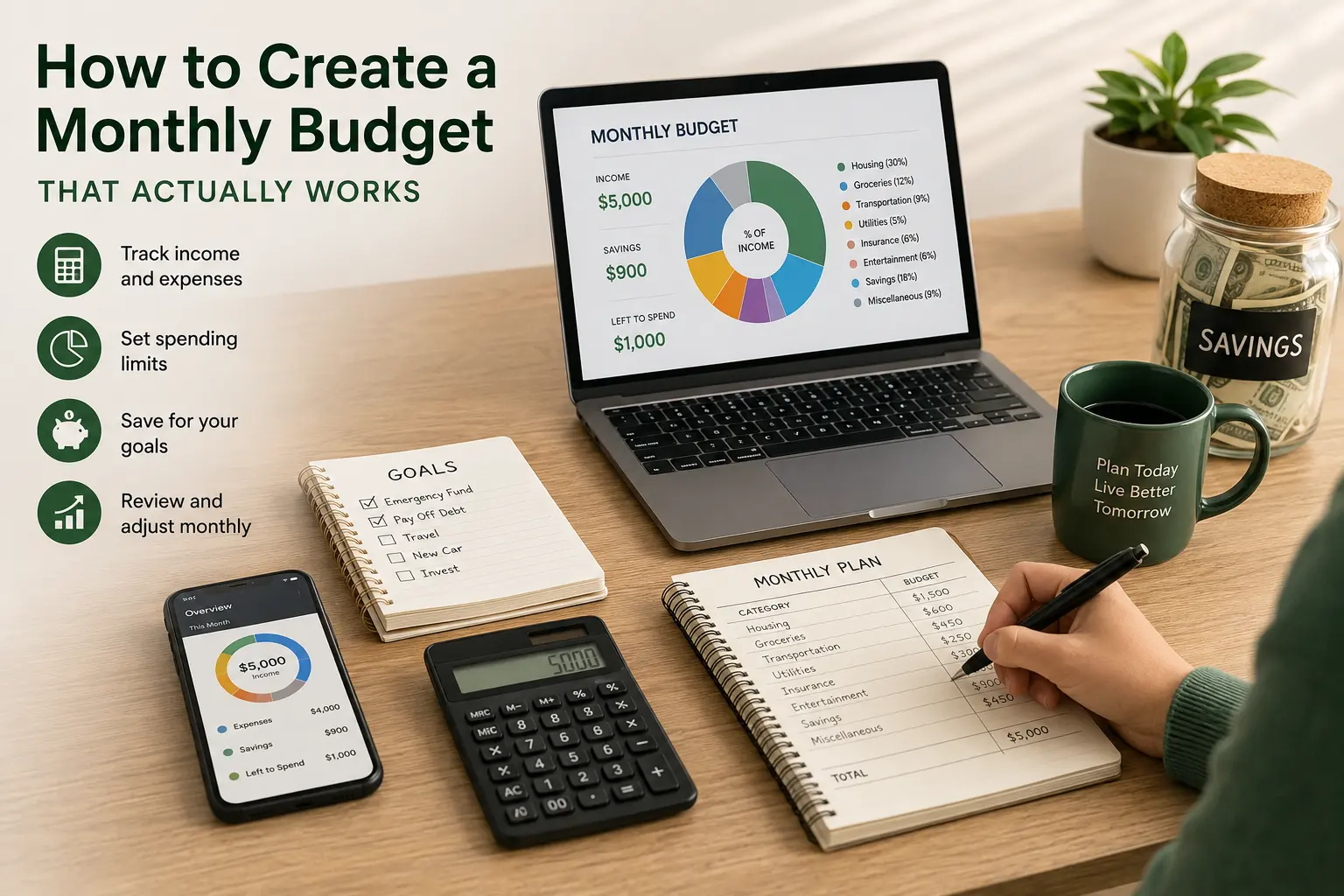
    Here’s an example of a monthly budget for someone earning $5,000 after taxes.

    Category Monthly budget % of income
    Housing $1,500 30%
    Utilities $250 5%
    Groceries $600 12%
    Transportation $450 9%
    Insurance $300 6%
    Entertainment $300 6%
    Dining out $250 5%
    Savings & investments $900 18%
    Miscellaneous $450 9%

    Remember that no budget is universal.

    Someone living in New York will spend far more on housing than someone living in a smaller city. Families with children will likely spend more on groceries, while someone working remotely may spend much less on transportation.

    Your budget should reflect your life, not someone else’s.

    Step 6: Review your budget every month

    A budget isn’t something you create once and forget.

    Life changes.

    Your income changes.

    Prices change.

    Your financial goals change.

    Review your budget at the end of every month and ask yourself:

    • Which categories stayed within budget?
    • Where did I overspend?
    • Was that spending necessary?
    • Can I reduce any expenses next month?
    • Did I save as much as I planned?

    Making small adjustments every month is far easier than trying to completely redesign your budget every year.

    Build flexibility into your budget

    Unexpected expenses aren’t a matter of if—they’re a matter of when.

    Your budget should always include a small buffer for expenses you didn’t anticipate.

    This could cover things like:

    • A birthday gift
    • A medical bill
    • Car maintenance
    • Home repairs
    • School expenses
    • Higher utility bills during extreme weather

    Without this cushion, even a minor surprise can throw your entire budget off track.

    Common budgeting mistakes

    Even people who budget regularly make mistakes.

    The good news is that most of them are easy to avoid once you recognize them.

    Setting unrealistic goals

    Cutting your grocery budget in half sounds great on paper.

    In reality, you’ll probably exceed it within the first two weeks.

    Aim for gradual improvements rather than dramatic changes.

    Forgetting annual expenses

    Some bills don’t arrive every month.

    Examples include:

    • Car registration
    • Insurance renewals
    • Holiday gifts
    • Property taxes
    • Annual subscriptions

    Divide these costs by twelve and include a monthly amount in your budget.

    Ignoring small purchases

    A $6 coffee doesn’t seem expensive.

    Neither does a $12 lunch.

    But daily habits often become the largest source of unnecessary spending over an entire year.

    Small purchases deserve just as much attention as large ones.

    Giving up after one bad month

    Almost nobody follows their budget perfectly.

    Overspending once doesn’t mean you’ve failed.

    Review what happened, make adjustments, and continue.

    Consistency matters much more than perfection.

    Signs your budget is working

    A successful budget doesn’t necessarily mean you’re spending less.

    It means you’re spending with intention.

    You know where your money goes.

    You’re making progress toward your financial goals.

    And you’re no longer surprised by your bank balance at the end of the month.

    Some positive signs include:

    • You’re saving money consistently.
    • Credit card balances are decreasing.
    • Unexpected expenses cause less stress.
    • You feel more confident making financial decisions.
    • You’re no longer living paycheck to paycheck.

    Frequently asked questions

    How much of my income should I save each month?

    A common recommendation is to save at least 20% of your income, but the right amount depends on your financial situation. If that’s not realistic today, start with 5% or 10% and gradually increase your savings as your income grows or your expenses decrease.

    Should I budget if my income changes every month?

    Yes. If your income varies, calculate your average monthly income based on the past six to twelve months. Build your budget around that average and prioritize essential expenses before discretionary spending.

    What’s the easiest way to track my spending?

    You can use a budgeting app, a spreadsheet, or even a notebook. The best system is the one you’ll actually use consistently. Recording your spending every few days is usually easier than trying to remember everything at the end of the month.

    How often should I review my budget?

    Review your budget at least once a month. However, checking your spending weekly can help you catch problems early and avoid overspending before the month ends.

    What if I go over budget?

    Going over budget occasionally is normal. Instead of giving up, identify what caused the extra spending and adjust your budget for the following month. Budgeting is an ongoing process, not a one-time event.

    Should I pay off debt or save money first?

    If you don’t have an emergency fund, try to save a small amount first—often enough to cover one month of essential expenses. After that, focus on paying off high-interest debt while continuing to build your savings over time.

    Do I need separate savings accounts?

    Not necessarily, but many people find it helpful to keep separate accounts for different goals, such as an emergency fund, vacations, or a down payment. This makes it easier to track progress and reduces the temptation to spend money set aside for future plans.

    Can budgeting actually help me build wealth?

    Absolutely. Budgeting doesn’t create wealth on its own, but it helps you control cash flow, reduce unnecessary spending, save consistently, and invest regularly. Those habits are the foundation of long-term financial success.

    Bottom line

    Creating a monthly budget isn’t about restricting your life—it’s about making intentional decisions with your money.

    A good budget gives every dollar a purpose, helps you prepare for unexpected expenses, and keeps your financial goals within reach. It won’t be perfect every month, and that’s okay. The goal isn’t perfection – it’s progress.

    The most successful budgets are simple enough to follow, flexible enough to adapt to life’s surprises, and realistic enough that you’ll stick with them over the long term.

    If you’re just getting started, don’t wait for the perfect moment. Open your bank statements, calculate your income, list your expenses, and build your first budget today. You can always improve it next month.

  • How to save your first $10,000

    How to save your first $10,000

    Ask almost anyone who’s built financial security, and they’ll tell you that the first $10,000 was the hardest.

    Not because it required complicated investment strategies or an unusually high salary, but because it demanded something much more difficult: changing everyday habits. Before you have meaningful savings, every unexpected expense feels like a setback. A car repair, a medical bill, or even replacing a broken appliance can erase months of progress overnight.

    That’s why reaching your first five figures in savings is such an important milestone. It represents more than the balance in your account. It proves you’ve developed the habits necessary to build long-term wealth.

    The journey isn’t always fast, and it rarely follows a straight line. But with a realistic plan and consistent decisions, saving $10,000 is achievable for far more people than they realize.

    Why the first $10,000 feels so difficult

    Saving money becomes easier as your financial foundation grows.

    When you have little or no savings, every dollar you set aside competes with immediate needs and everyday temptations. At the same time, your money isn’t yet generating meaningful interest, so nearly all of your progress depends on your own contributions.

    Once you’ve accumulated a larger balance, the process begins to accelerate. Interest compounds, financial emergencies become less disruptive, and you’re less likely to rely on debt when unexpected expenses arise.

    The first $10,000 creates momentum that makes future financial goals feel much more attainable.

    Start with a realistic monthly target

    Many people begin by asking how they can save $10,000 as quickly as possible.

    A better question is how much they can realistically save every month without abandoning the plan after a few weeks.

    Consistency almost always beats intensity.

    Saving $300 every month for several years will usually produce better results than attempting to save $1,500 for two months before giving up entirely.

    The goal should fit your current financial situation, not someone else’s.

    Increase income before cutting everything

    Budgeting matters, but there is a limit to how much you can reduce spending.

    Income, on the other hand, often has far greater potential.

    Negotiating a raise, changing jobs, taking freelance work, selling unused items, or creating a small side business may contribute far more toward your first $10,000 than eliminating every small luxury from your life.

    Successful savers usually combine both approaches: they spend intentionally while continuously looking for opportunities to earn more.

    Automate your savings

    One of the simplest ways to build savings is to remove the decision altogether.

    Automatic transfers scheduled for payday ensure that saving happens before money is available for discretionary spending.

    Over time, automation turns saving from an occasional activity into a routine financial habit.

    People rarely miss money they never had the opportunity to spend.

    Give your savings a purpose

    Saving becomes easier when the goal feels tangible.

    Rather than simply trying to reach $10,000, think about what that money represents.

    For one household, it may become a fully funded emergency fund.

    For another, it could be the beginning of a down payment on a home.

    Others may view it as the foundation of their investment portfolio or the financial cushion that allows them to change careers without fear.

    Money saved without purpose often gets spent without purpose.

    Celebrate progress, not perfection

    Financial goals aren’t achieved through perfect months.

    Unexpected expenses will happen.

    Some months you’ll save less than planned.

    Others you may not save at all.

    The important part is returning to the plan instead of assuming you’ve failed.

    Building wealth is rarely defined by one outstanding decision. It’s usually the result of hundreds of ordinary decisions repeated over many years.

    Your first $10,000 isn’t the finish line.

    It’s proof that you’ve built habits capable of carrying you much further.

  • Living paycheck to paycheck: Why it happens and how to break the cycle

    Living paycheck to paycheck: Why it happens and how to break the cycle

    For millions of Americans, payday brings a brief sense of relief.

    Bills get paid, the checking account finally looks healthy again, and for a few days it feels like everything is under control. But as the month moves on, that balance slowly disappears. Rent, groceries, insurance, transportation, subscriptions, and everyday purchases quietly consume the paycheck until there’s little—or nothing—left before the next one arrives.

    Eventually, the cycle repeats.

    Living paycheck to paycheck isn’t always a sign of poor financial decisions. In many cases, it’s the result of rising housing costs, inflation, healthcare expenses, student loans, or wages that haven’t kept pace with the cost of living. People across every income level experience it, including professionals with six-figure salaries.

    The problem isn’t necessarily how much money you earn. Often, it’s how little room exists between your income and your monthly obligations.

    What does living paycheck to paycheck really mean?

    The phrase is frequently misunderstood.

    It doesn’t simply mean having a low income. It means depending on your next paycheck to meet your current financial commitments.

    If missing one paycheck would immediately make it difficult to pay rent, cover groceries, or keep up with monthly bills, you’re likely living paycheck to paycheck regardless of your salary.

    Some households earn $45,000 a year and struggle.

    Others earn more than $150,000 and experience exactly the same financial pressure because their expenses have grown alongside their income.

    The common factor isn’t income—it’s the absence of financial breathing room.

    Why higher income doesn’t always solve the problem

    Many people believe a raise will automatically eliminate financial stress.

    Sometimes it does.

    But many households experience something known as lifestyle inflation. As income grows, spending grows with it. A larger apartment, newer car, more vacations, premium subscriptions, and frequent dining out gradually become part of everyday life.

    Before long, the higher paycheck feels just as tight as the previous one.

    Without intentional financial planning, increased income often creates a more expensive lifestyle rather than greater financial security.

    The hidden cost of constant financial pressure

    Living paycheck to paycheck affects far more than your bank account.

    It influences daily decisions, career choices, relationships, and even physical health.

    Unexpected expenses become emergencies.

    Necessary repairs get postponed.

    Retirement savings are delayed.

    Credit cards become a temporary solution that often develops into long-term debt.

    Over time, financial stress can create a cycle that’s difficult to escape because every setback reduces the ability to prepare for the next one.

    Small changes can create breathing room

    Escaping the paycheck-to-paycheck cycle rarely happens overnight.

    For most people, it’s the result of gradually creating more space between income and expenses.

    That may involve reducing recurring monthly costs, negotiating insurance premiums, refinancing expensive debt, increasing income through career development or freelance work, or simply becoming more intentional about discretionary spending.

    Building even a modest emergency fund can change the entire equation.

    Instead of relying on credit cards when something unexpected happens, savings provide time to respond without immediately creating new debt.

    Progress usually begins with small improvements rather than dramatic transformations.

    Focus on building margin, not perfection

    Many budgeting articles encourage people to cut every non-essential expense.

    While reducing unnecessary spending can certainly help, sustainable financial progress comes from creating margin—not eliminating everything enjoyable.

    A realistic budget should include room for entertainment, hobbies, and occasional treats.

    Financial plans fail when they become impossible to live with.

    The objective isn’t to build the cheapest possible lifestyle.

    It’s to build one that’s financially sustainable.

    Financial freedom starts with one extra dollar

    One extra dollar left at the end of the month may not seem significant.

    But it represents something much more important.

    It means your money is beginning to work for you instead of disappearing as quickly as it arrives.

    That extra dollar eventually becomes twenty.

    Twenty becomes two hundred.

    Two hundred becomes the beginning of an emergency fund.

    Every financially stable household started somewhere.

    Breaking the paycheck-to-paycheck cycle isn’t about becoming rich overnight.

    It’s about slowly creating choices where previously there were none.

    Financial freedom isn’t built in a single paycheck.

    It’s built through hundreds of intentional decisions that gradually give you more control over your future.

  • Needs vs. Wants: How to tell the difference and spend smarter

    Needs vs. Wants: How to tell the difference and spend smarter

    One of the simplest concepts in personal finance is also one of the hardest to apply in everyday life.

    Most people understand that paying rent is more important than buying a new pair of sneakers. But real financial decisions are rarely that obvious. Is your daily coffee a need or a want? What about high-speed internet when you work from home? Is replacing your five-year-old smartphone a necessity, or simply something you would like to do?

    The line between needs and wants has become increasingly blurred, especially as technology, convenience, and lifestyle expectations have evolved. Understanding the difference isn’t about judging how people spend their money. It’s about making sure your spending reflects your priorities rather than your impulses.

    Learning to separate essential expenses from discretionary spending is one of the foundations of successful budgeting and long-term financial health.

    What is a Need?

    A need is an expense that supports your basic ability to live, work, and maintain your health and safety.

    For most households, that includes housing, groceries, utilities, health insurance, transportation to work, prescription medications, and minimum debt payments. These are the costs that continue regardless of whether you’re trying to save money or reduce spending.

    Without them, daily life becomes difficult or impossible.

    That doesn’t mean every version of these expenses is a necessity. Owning a car may be essential if public transportation isn’t available, but choosing a luxury vehicle instead of a reliable used car is a lifestyle decision.

    The category often stays the same, even when the amount you spend changes dramatically.

    What Is a want?

    A want is anything that improves your lifestyle without being essential for meeting your basic needs.

    Dining out, entertainment subscriptions, vacations, designer clothing, gaming consoles, premium smartphones, and impulse purchases all fall into this category for most people.

    Wants aren’t bad.

    In fact, eliminating every enjoyable expense usually creates frustration and makes budgets impossible to maintain.

    The goal isn’t to stop spending on things you enjoy. The goal is to make sure those purchases happen intentionally and fit comfortably within your financial plan.

    Healthy personal finance leaves room for both responsibility and enjoyment.

    Why the difference matters

    Many financial problems don’t begin with one large purchase.

    They develop through dozens of small decisions that feel insignificant on their own.

    A streaming subscription here.

    Food delivery twice a week.

    An upgraded phone plan.

    Several online impulse purchases.

    Individually, each expense may seem manageable. Together, they can quietly consume hundreds of dollars every month.

    Recognizing the difference between needs and wants helps you identify where adjustments can be made without sacrificing your quality of life.

    Your priorities will change over time

    One of the biggest mistakes people make is believing their budget should remain the same forever.

    Financial priorities naturally evolve.

    Someone in their twenties may choose to spend more on travel and experiences.

    Parents may prioritize childcare, education, and family expenses.

    Later in life, retirement savings and healthcare become increasingly important.

    What qualifies as a priority changes as life changes.

    A good budget evolves with you instead of forcing you into the same spending habits year after year.

    How to make better spending decisions

    Before making a purchase, ask yourself a few simple questions.

    Would my life become significantly more difficult if I didn’t buy this?

    Can this purchase wait until next month?

    Will I still value this purchase six months from now?

    Would I rather have this item or move closer to one of my financial goals?

    Those questions often provide more useful answers than simply asking whether something is affordable.

    Being able to afford something doesn’t automatically mean it’s the best use of your money.

    Financial freedom comes from intentional choices

    The difference between people who consistently build wealth and those who constantly feel financially stretched isn’t always income.

    It’s often awareness.

    People who understand where their money goes tend to make better long-term decisions because they’re spending according to their priorities instead of reacting to every temptation.

    Separating needs from wants doesn’t remove enjoyment from life.

    It simply ensures that today’s spending doesn’t prevent tomorrow’s opportunities.

    Financial freedom isn’t built by saying “no” to everything.

    It’s built by saying “yes” to the things that matter most.